
LPG Soft
21st Oct 2026
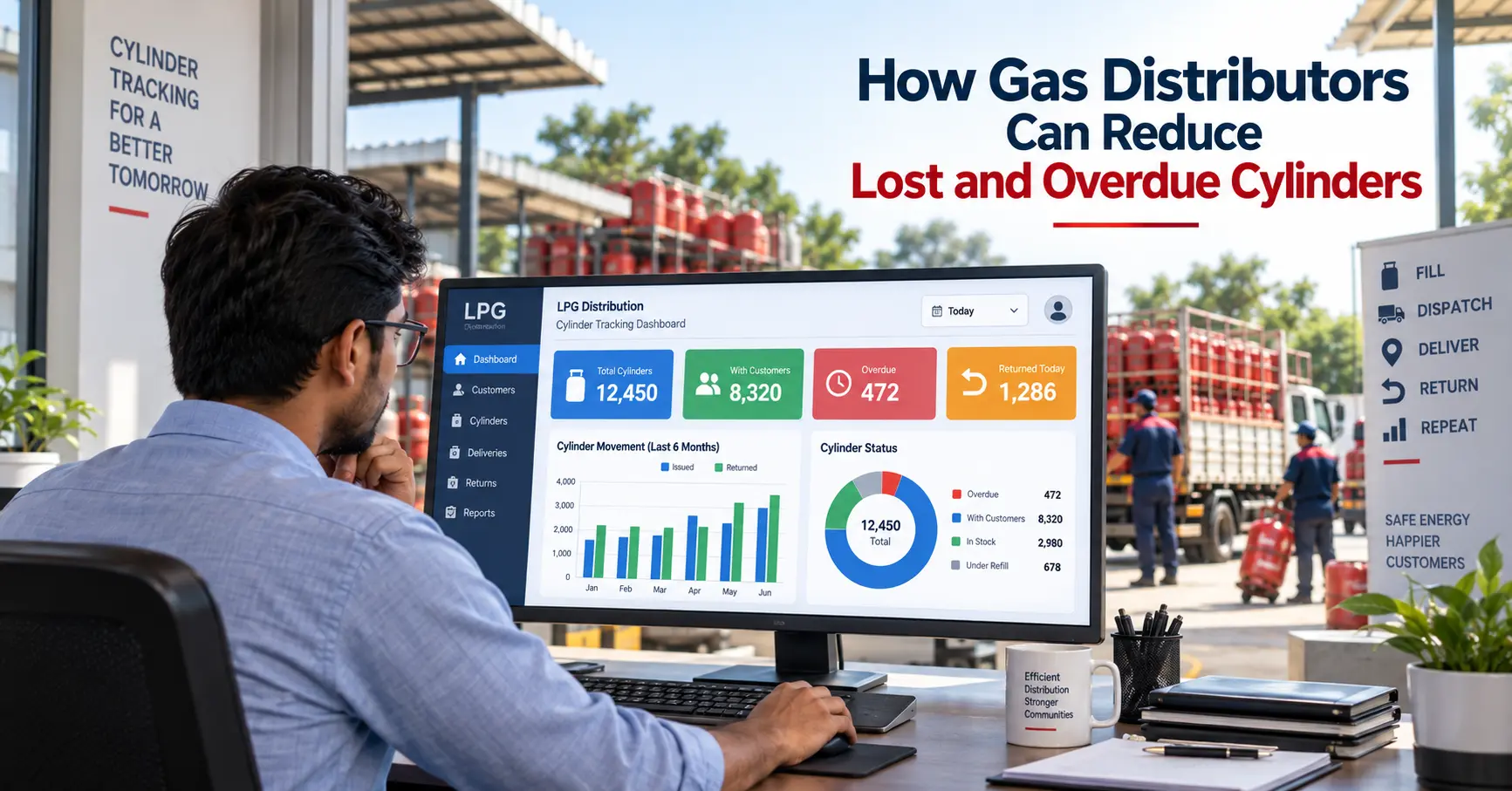
Gas Cylinder Business Software: What Should a Distributor Track?
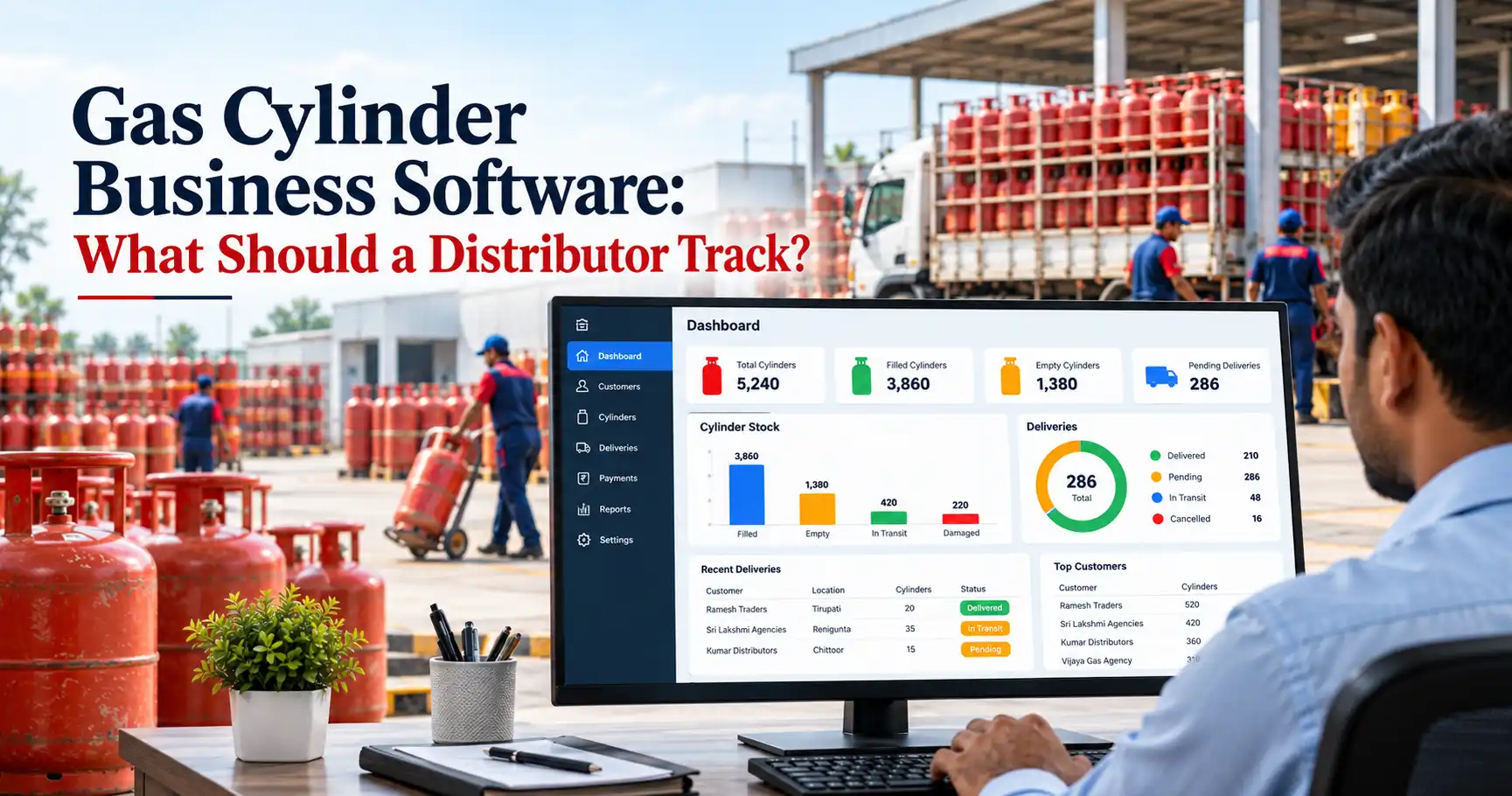
A gas cylinder distributor should track seven things: cylinder stock (filled, empty and defective), empties held by customers, customer-wise sales, pending payments, deposits, delivery performance, and compliance dates. Gas cylinder business software records all seven in one system, so you stop losing money to mismatches that registers and Excel sheets never show.
Where Does a Gas Cylinder Distributor Actually Lose Money?
Most distributors think profit depends on how many cylinders they sell. In reality, it depends on how many cylinders and how much money they fail to lose.
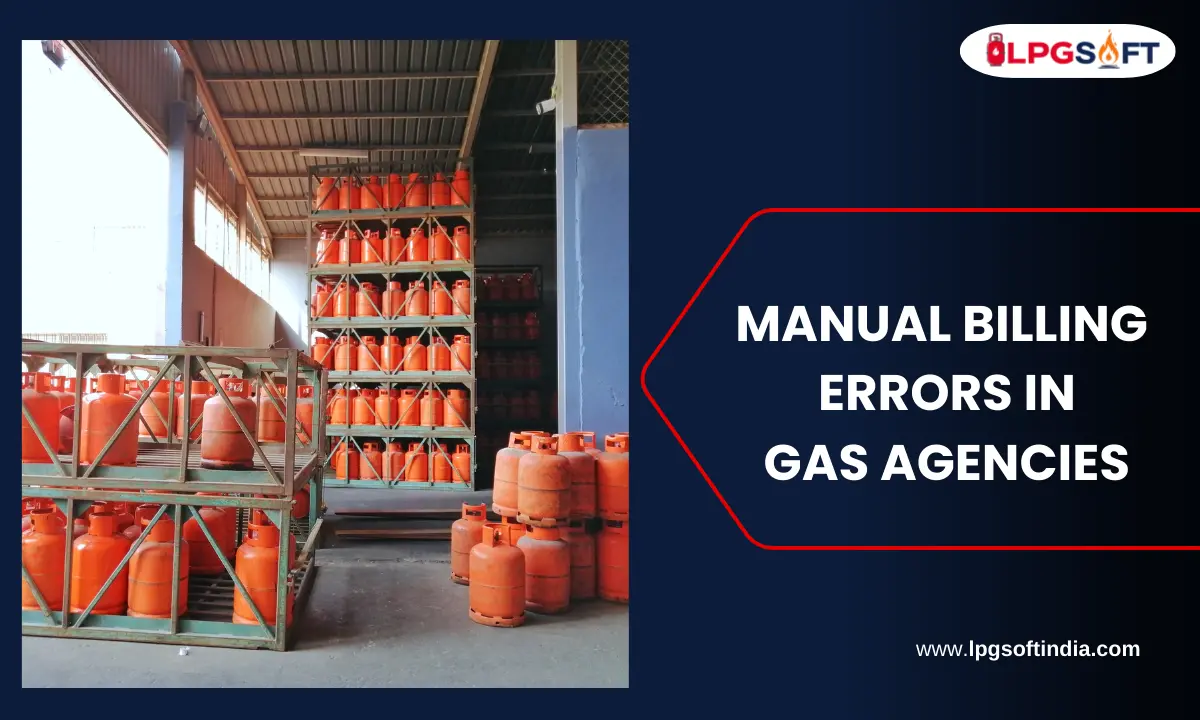
A cylinder business is unusual. Your main asset (the cylinder) leaves your godown, sits at a customer’s place for days or weeks, and is supposed to come back. Every step creates a chance for a gap:
- An empty cylinder that never came back
- A delivery that was made but never billed
- A payment promised “next week” that turns into three months
- A stock count that does not match the register
None of this look big on a single day. Added over a year, they quietly eat your margin. That is why the question is not “which software has the most features?” but “what exactly should I be watching?”
The 7 Leaks to Track in Your Gas Cylinder Business

1. Cylinder Stock: Filled, Empty, Defective and In-Transit
Track every cylinder by status and location, not just a total count.
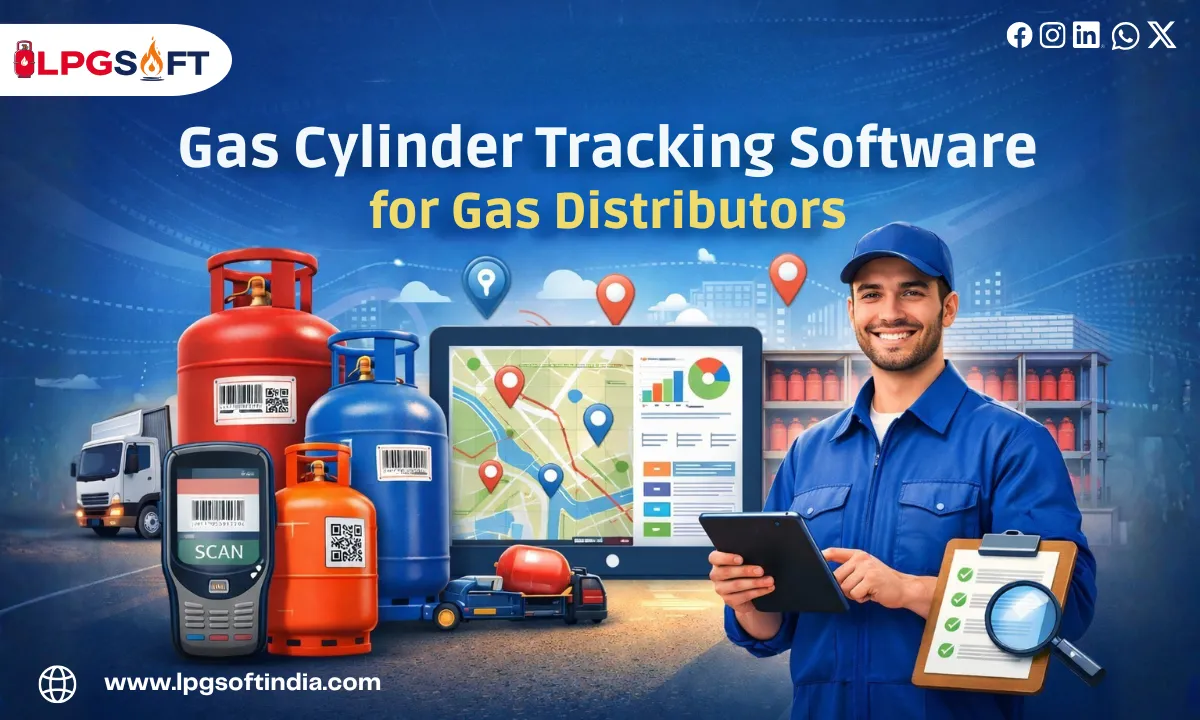
A total of “500 cylinders” tells you nothing. You need to know how many are filled in the godown, how many are empty awaiting refill, how many are on delivery vehicles, and how many are defective or due for testing. If you run more than one godown, this must be visible godown-wise.
What breaks without tracking: Stock-outs during busy days, and cylinders that “disappear” between godowns.
2. Empty Cylinders Held by Customers
Short answer: Know which customer holds how many of your cylinders, and for how long.
This is the most expensive blind spot in the industry. A cylinder costs real money, and every unreturned empty is a direct asset loss. Tracking customer-wise cylinder balance shows you who is holding extra, who is overdue, and where to follow up first.
What breaks without tracking: Disputes with commercial customers, and a slow, silent drain on your cylinder pool.
3. Customer-Wise Sales and Delivery Records
Short answer:Every delivery should be linked to a customer, a date, a quantity and an invoice.
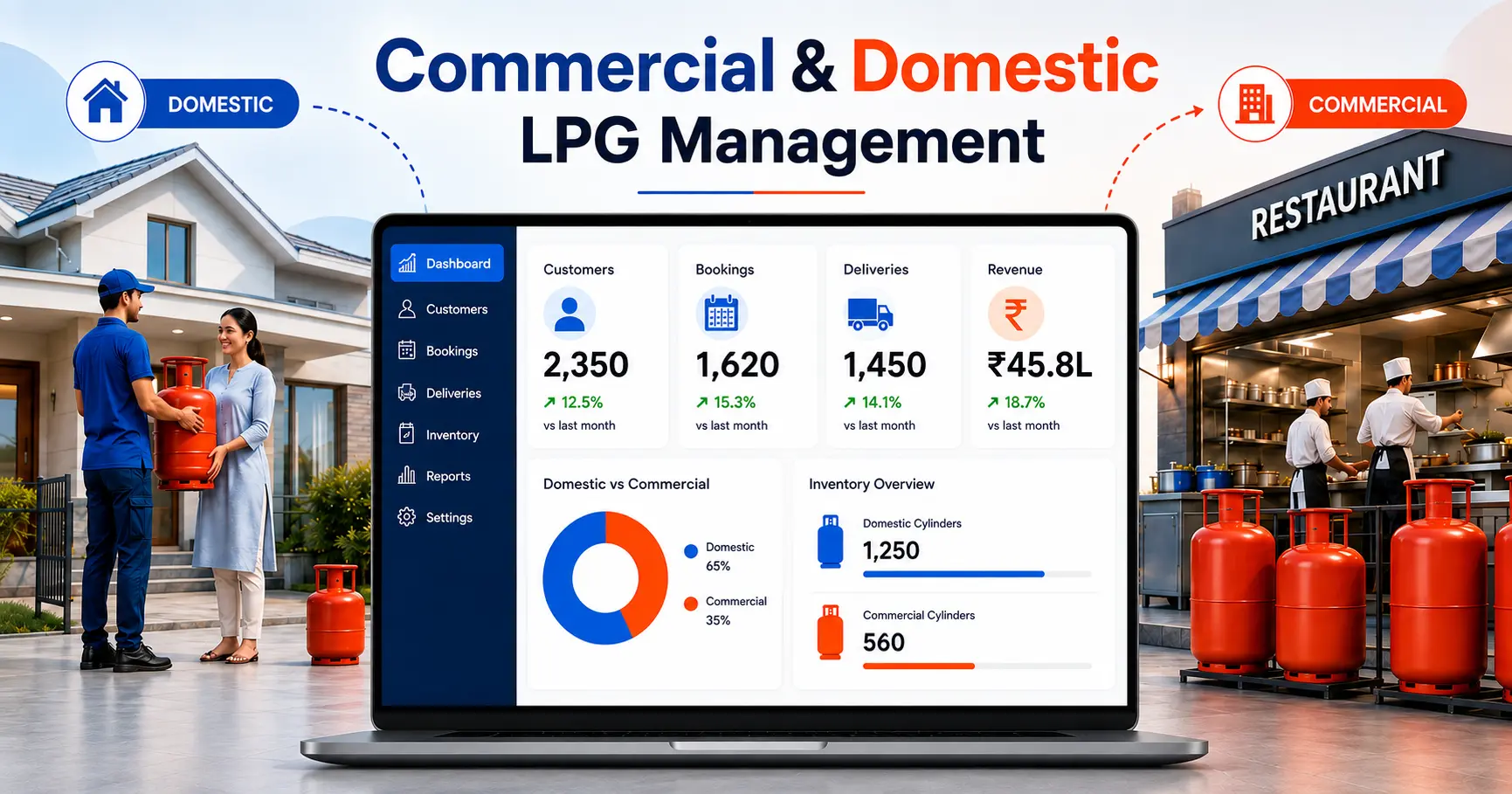
Domestic and commercial customers behave differently. Commercial customers (restaurants, hotels, canteens) order larger volumes and expect credit, while domestic customers expect speed and reliability. When your records are separate for each, you can see who your best customers are and who is slowing down.
What breaks without tracking: Unbilled deliveries, repeat billing errors, and no clear view of your top accounts.
4. Pending Payments and Credit Exposure
Short answer: Track outstanding amounts by customer and by age (30, 60, 90+ days).
Cash flow decides whether a gas agency can buy stock on time. Payment ageing reports show which dues are getting dangerous before they become bad debt. A simple rule: the older the due, the lower the chance of recovery.
What breaks without tracking: You find out about a bad account only when the customer stops answering calls.
5. Deposits and Refunds
Short answer: Keep a clean record of cylinder deposits taken, adjusted and refunded.
Deposit mismatches are a common source of customer disputes, especially when a customer returns after a long time. A proper record protects both you and the customer.
What breaks without tracking: Arguments over refund amounts, and trust damage you cannot easily repair.
6. Delivery Staff and Vehicle Performance
Short answer: Track deliveries per person and per vehicle, plus delays and returns.
Deliveries are where your service quality is won or lost. When you can see which routes are slow and which staff members handle more orders, you can plan better and answer customer complaints with facts.
What breaks without tracking: Repeated delays, unclear accountability, and no basis to fix the problem.
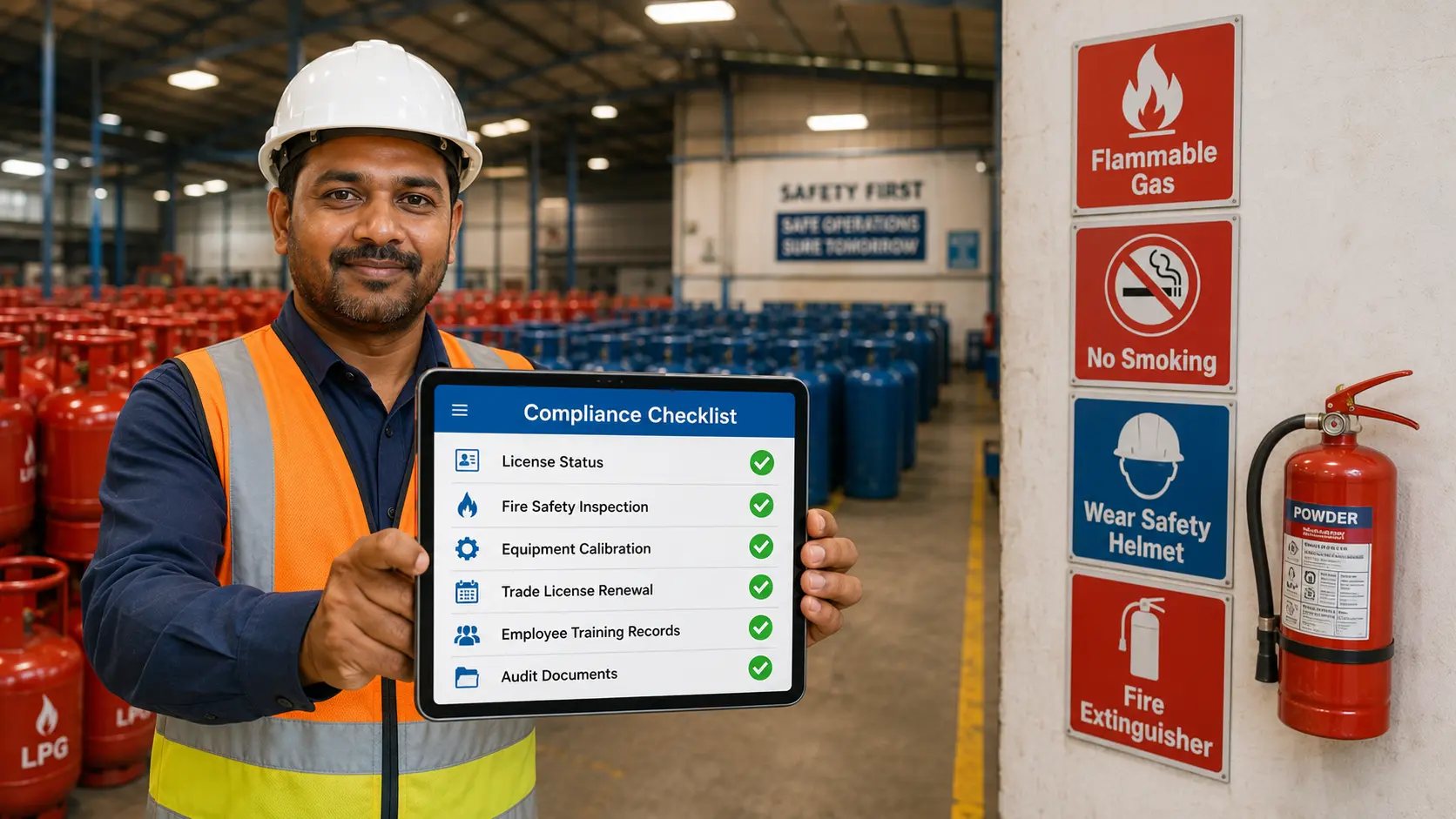
7. Licenses, Safety and Compliance Dates
Short answer: Set reminders for license renewals, safety inspections and cylinder test dates.
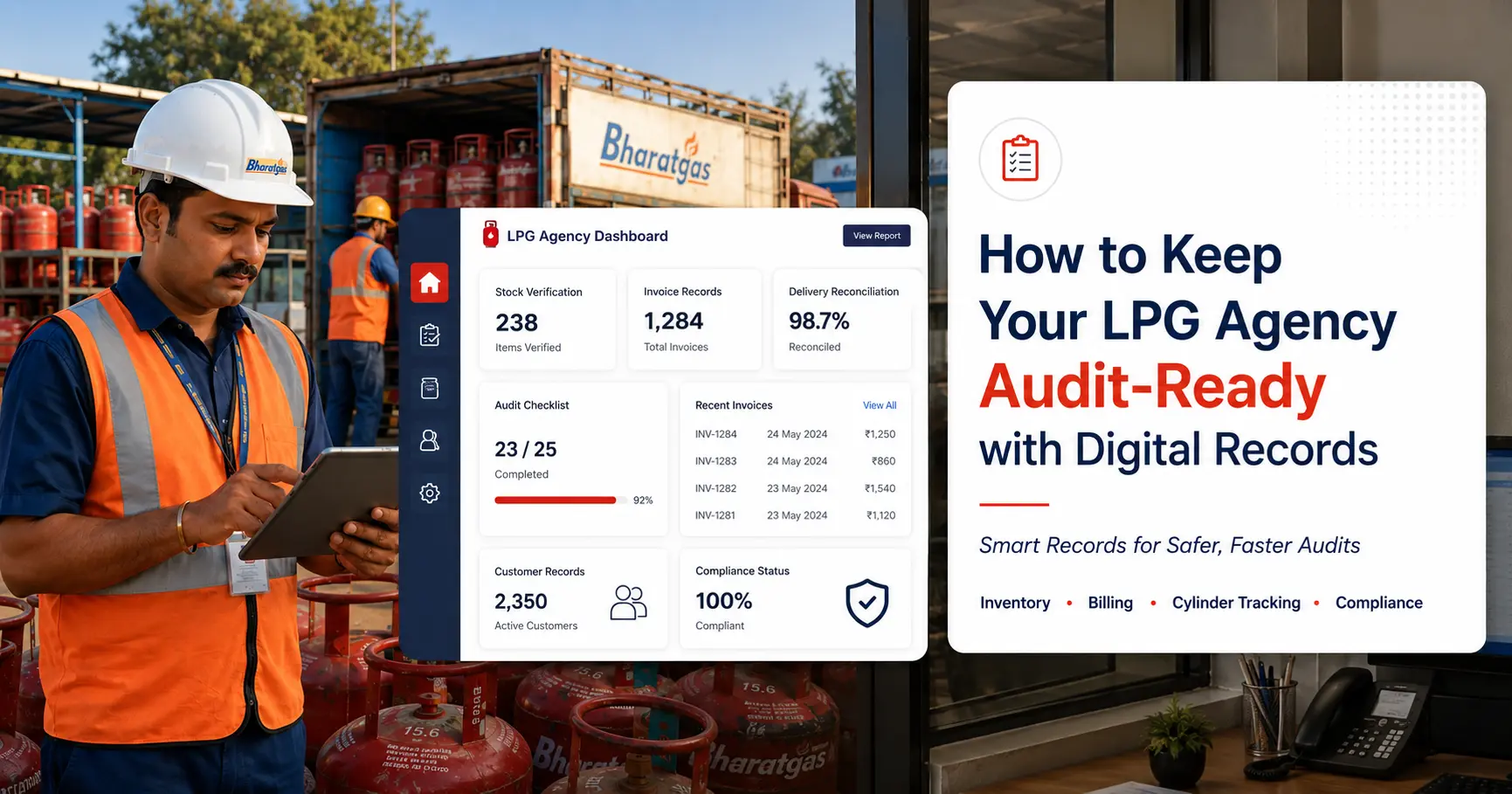
Missing a compliance date is not just an admin slip. It can lead to penalties and, more seriously, safety risks. Digital records also keep your agency audit-ready, because documents and dates are in one place instead of scattered files.
What breaks without tracking: Last-minute panic, penalties, and stress during inspections.
Registers and Excel vs Gas Cylinder Business Software
| What you need to track | Registers / Excel | Gas cylinder business software |
|---|---|---|
| Live cylinder stock by status | Updated manually, often late | Updates with every transaction |
| Empties held by each customer | Hard to calculate, easy to miss | Customer-wise balance in seconds |
| Pending payments | Needs manual follow-up lists | Ageing reports and reminders |
| Invoices and customer updates | Handwritten or typed one by one | Digital invoice, WhatsApp sharing |
| Multi-godown visibility | Separate files, no single view | One dashboard across locations |
| Compliance reminders | Depends on memory | Automatic alerts |
| Monthly reports | Hours of compilation | Ready on demand |
Excel works when you have a handful of customers. Once you have multiple godowns, delivery staff and commercial accounts, the sheet becomes the bottleneck.
What to Look for Before You Buy Gas Cylinder Software
Not every software suits a cylinder business. Before you decide, check whether it can do these:
- Track cylinders by status and location, not just billing
- Show customer-wise cylinder and payment balance together
- Support multiple godowns and locations
- Handle both domestic and commercial customers
- Send invoices and reminders digitally (including WhatsApp)
- Give compliance and license alerts
- Work easily for delivery staff, not only for office users
- Provide real support when your team gets stuck
If a tool is only a billing app with a “cylinder” label, it will cover point 3 and miss most of the rest.
How LPGSoft Helps You Track All 7 Leaks in One Place
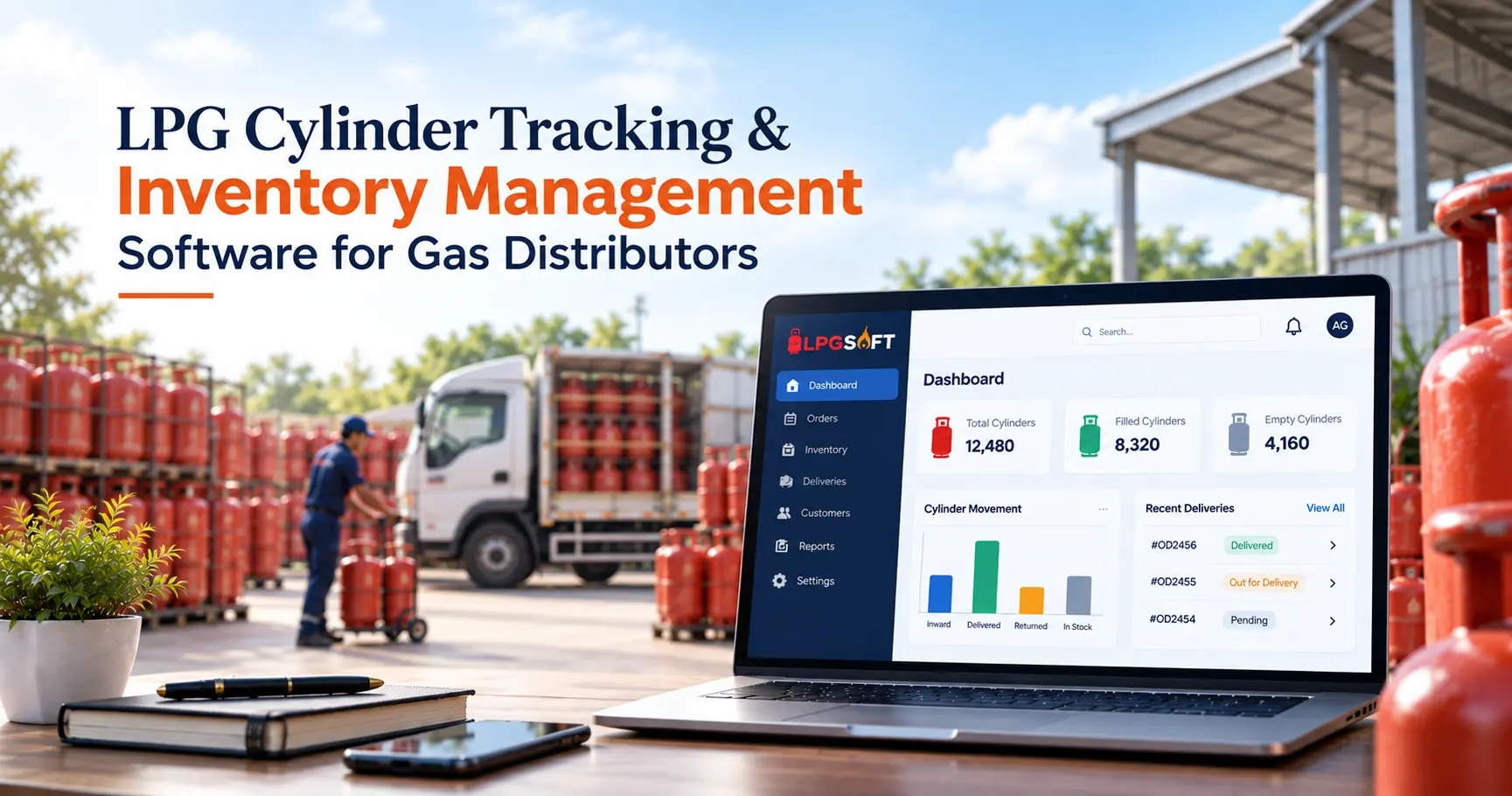
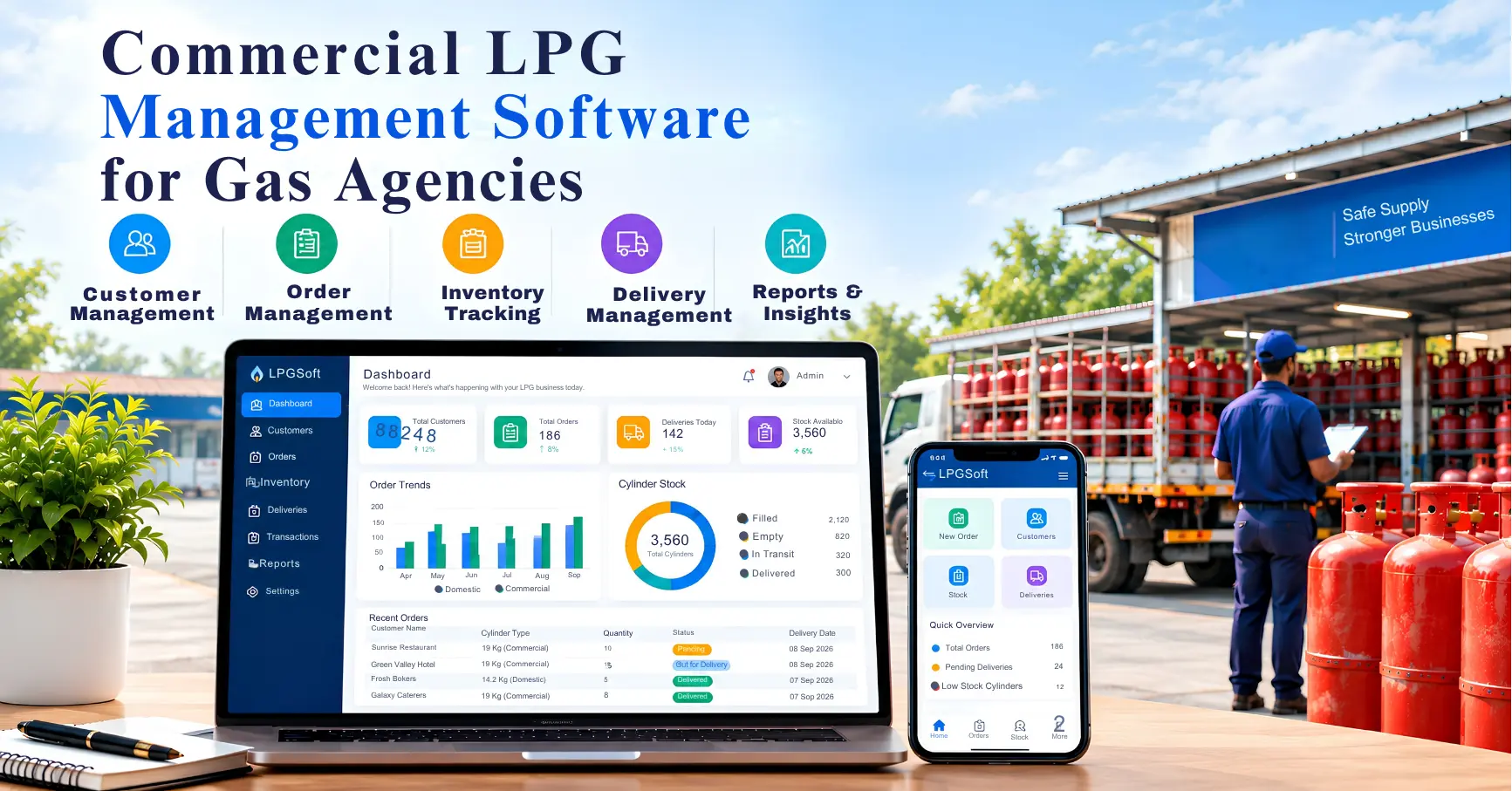
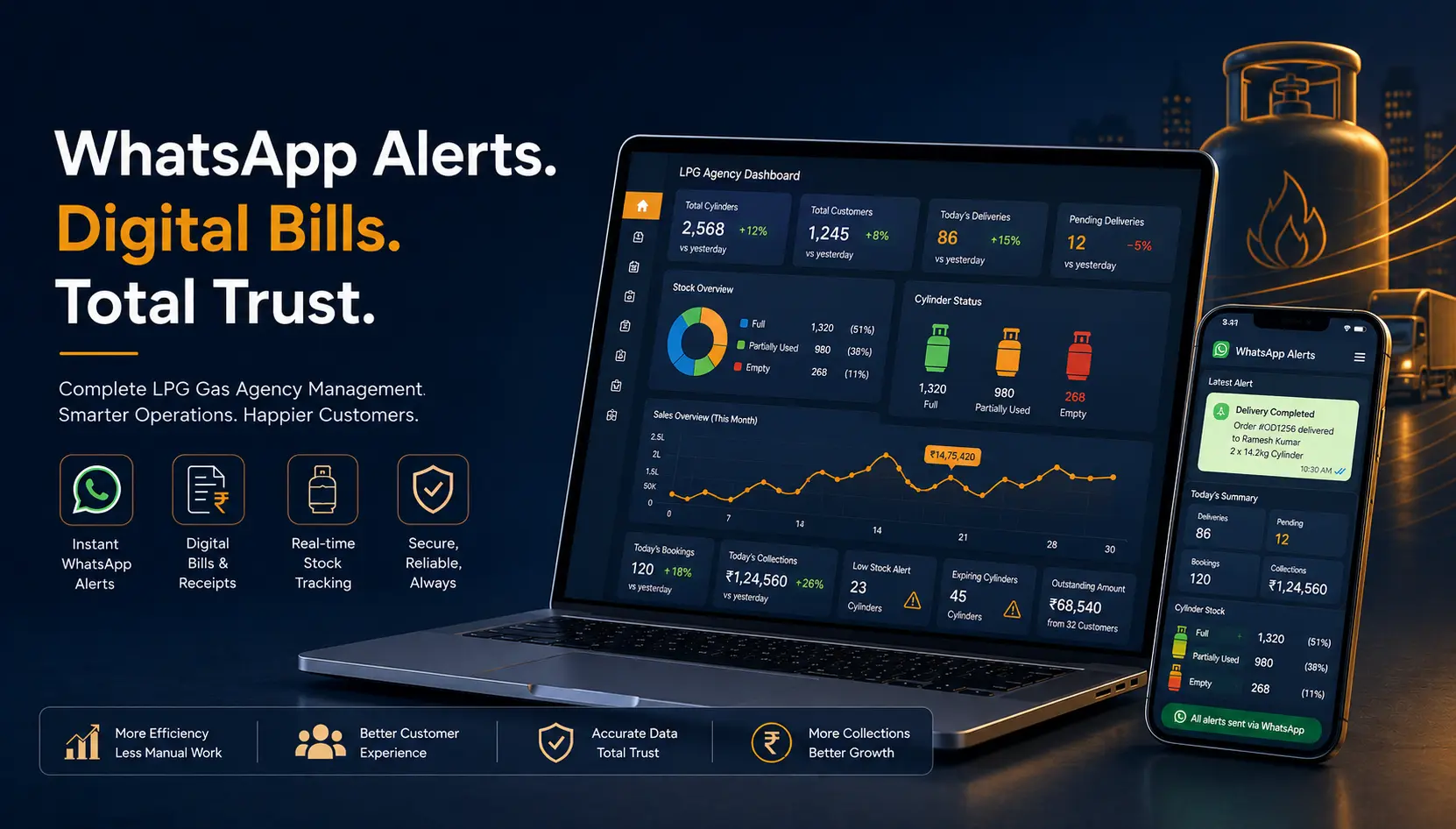
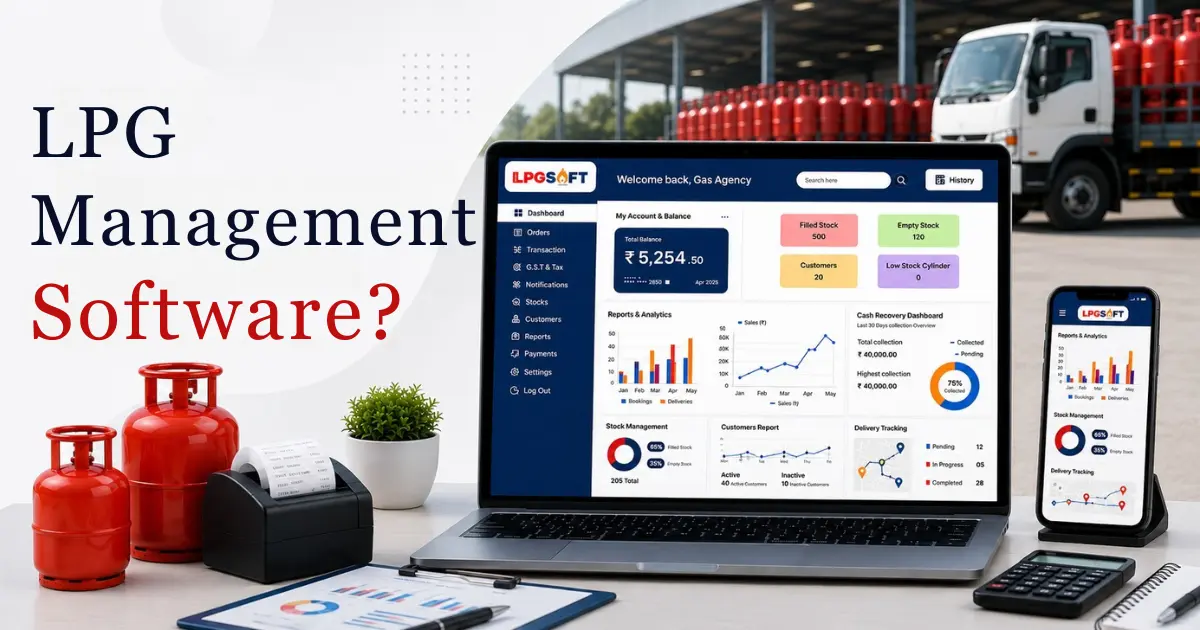
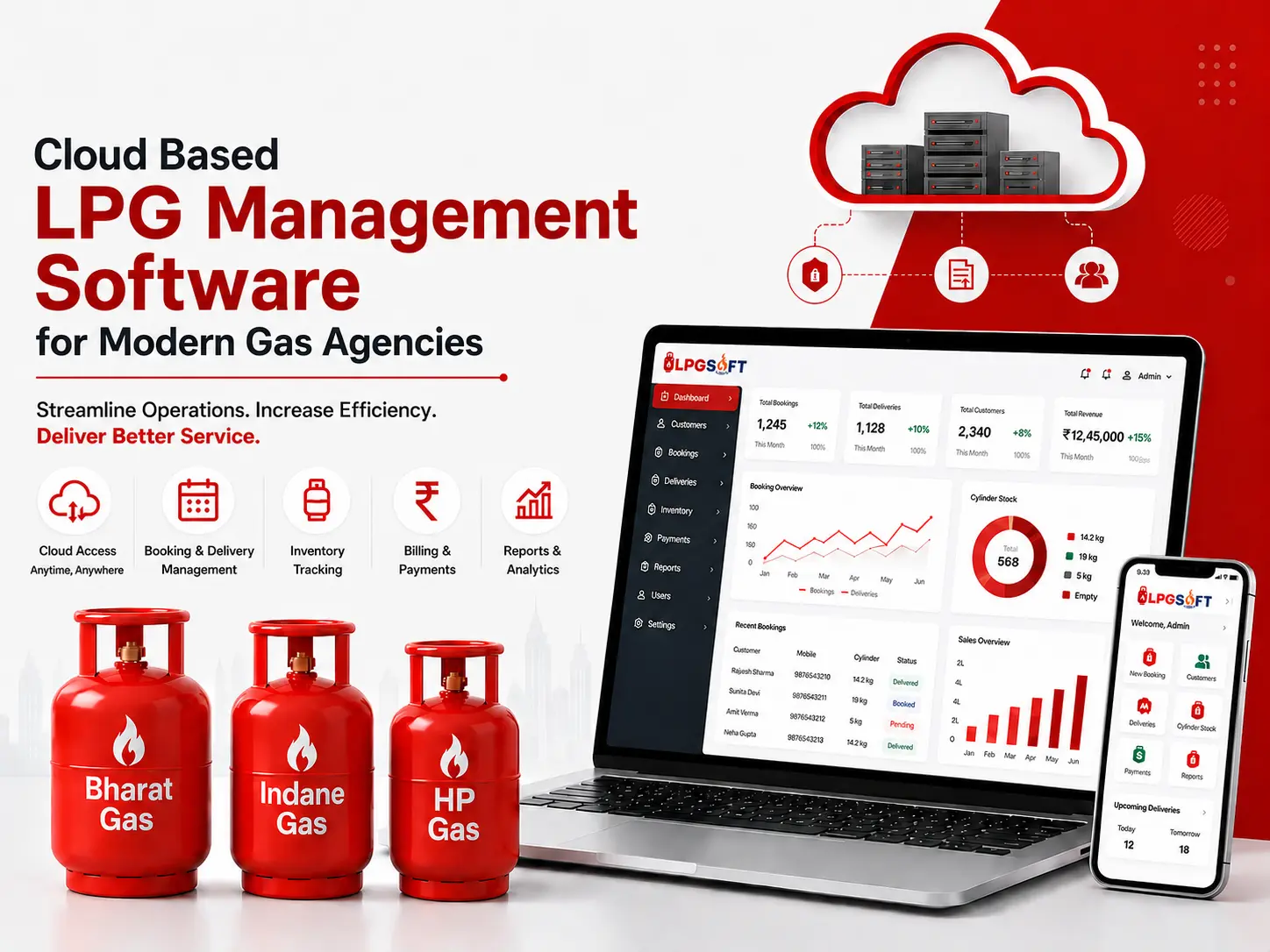
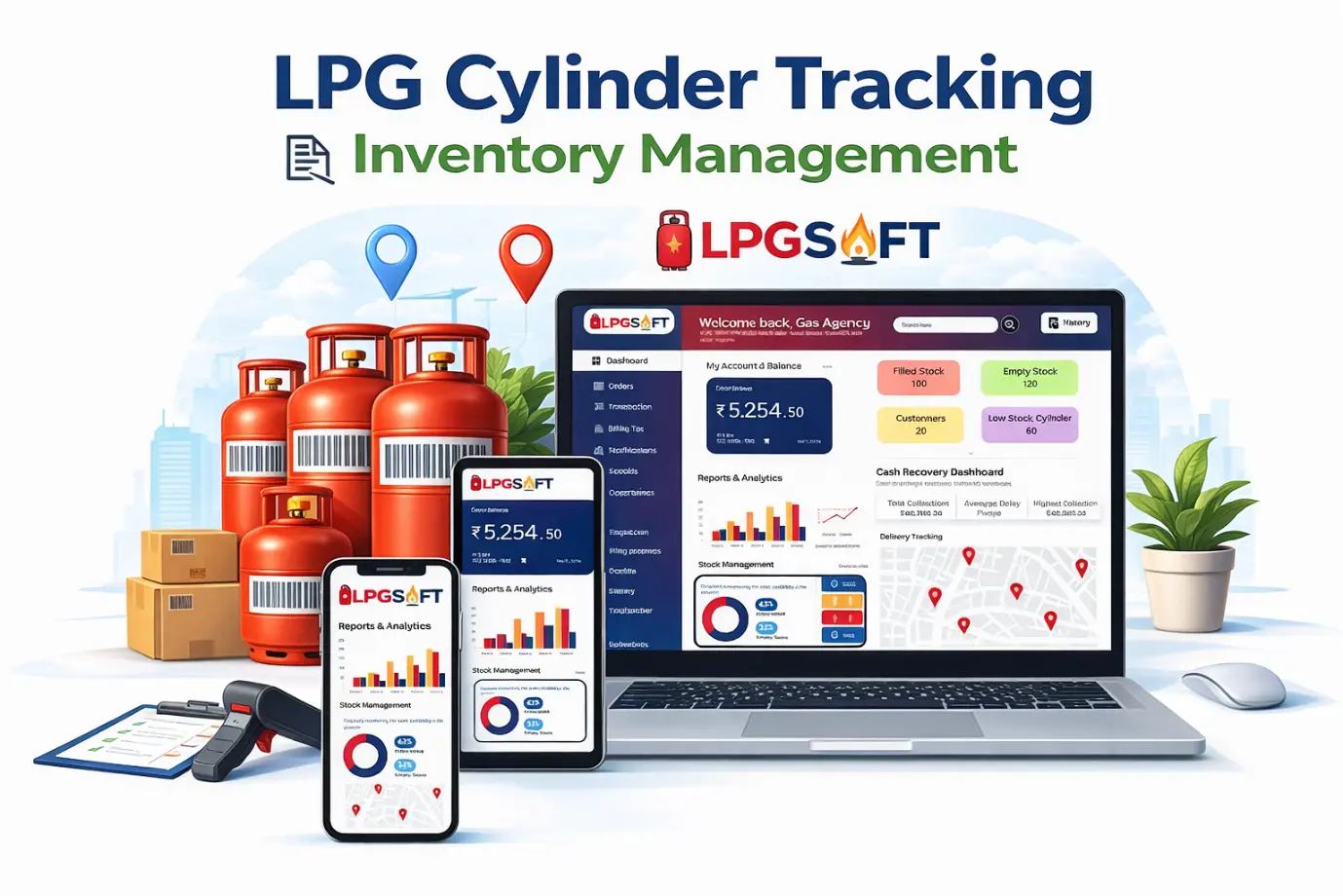
LPGSoft is built specifically for LPG and gas agencies in India, so it is organised around the way a cylinder business actually runs, not around generic accounting.
- Stock and godowns: See stock status and manage multiple godowns from one system
- Customers and deliveries: Keep domestic and commercial customer records and delivery history together
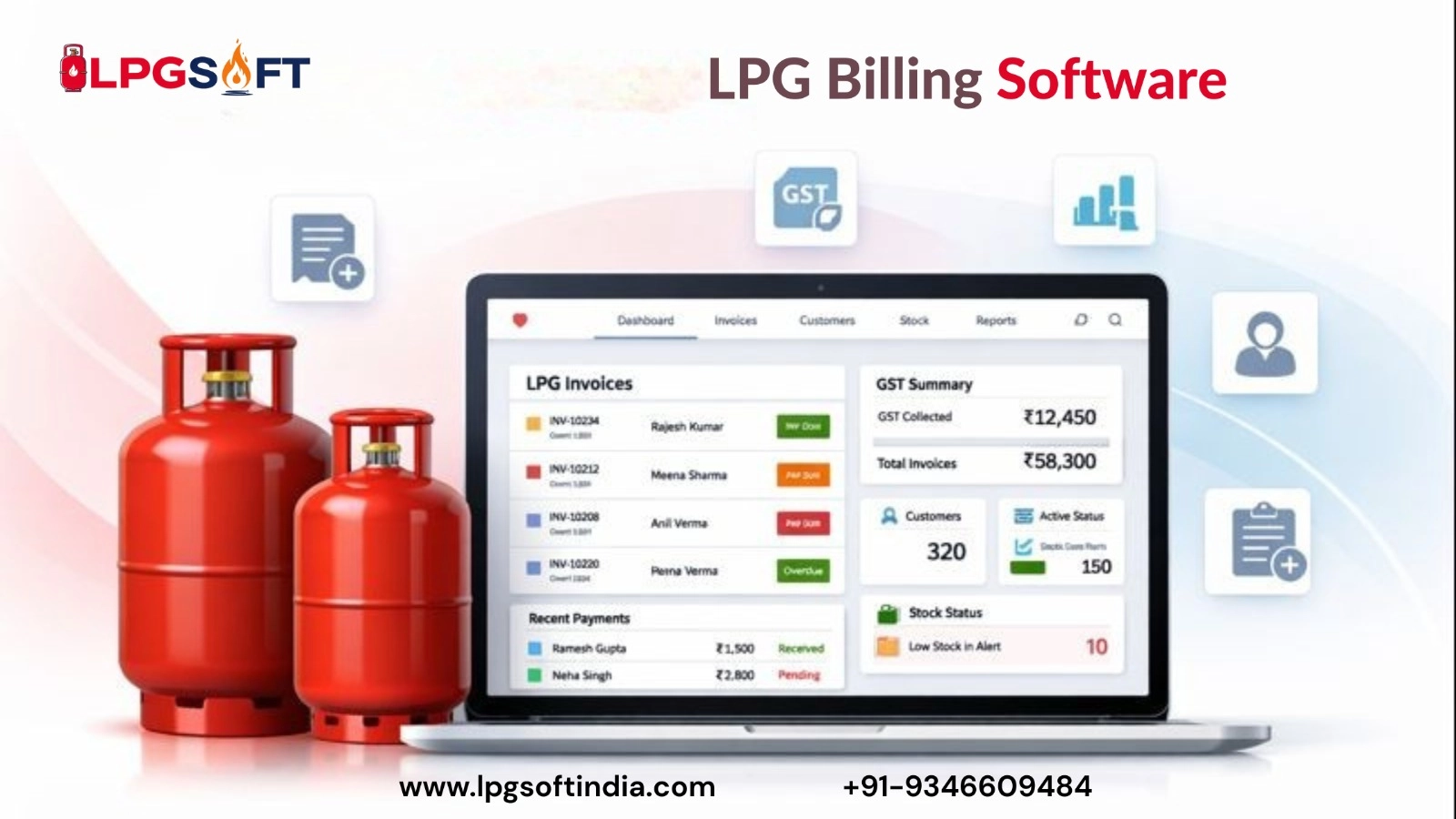
- Billing and invoices: Generate digital invoices and share them with customers, including through WhatsApp
- Payments: Monitor pending payments so follow-ups are timely
- Compliance: Stay ahead of renewal and safety deadlines with reminders and digital records
- Reports: Get the numbers you need without hours of manual compilation
The result is simple: fewer missing empties, fewer billing errors, faster collections, and a clear picture of your business every morning.
Final Thoughts:
Your Cylinders Are Working. Is Your Business Keeping Track?
Every day, your cylinders travel to kitchens, shops and homes, but missing empties, pending payments and deposit mismatches quietly drain your profit. The distributors who grow are the ones who know their numbers. You don’t need perfect tracking tomorrow, just a system that remembers for you.
Ready to Stop the Leaks?
See how LPGSoft tracks your cylinders, customers and payments in one system.
👉 [Book a Free Demo]: See it work on your own business scenario.
👉 [WhatsApp Us]: Get pricing and setup details today.
FAQ’S
It is a system that helps gas agencies and distributors manage cylinder stock, customers, billing, payments, deliveries and compliance in one place, replacing registers and spreadsheets.
By recording every delivery and return against the customer’s account, so the software shows each customer’s pending empty cylinder balance at any time.
Cylinder stock by status, deliveries completed, empties returned, payments received, and pending dues.
Yes. Small agencies benefit early because manual errors build up quickly, and a clean record from day one makes growth and audits easier.
Yes, good gas agency software shows stock and activity across godowns in a single view.
It can, through renewal reminders and digital records, which keep your documents organised and audit-ready.