
LPG Soft
19th Sep 2026
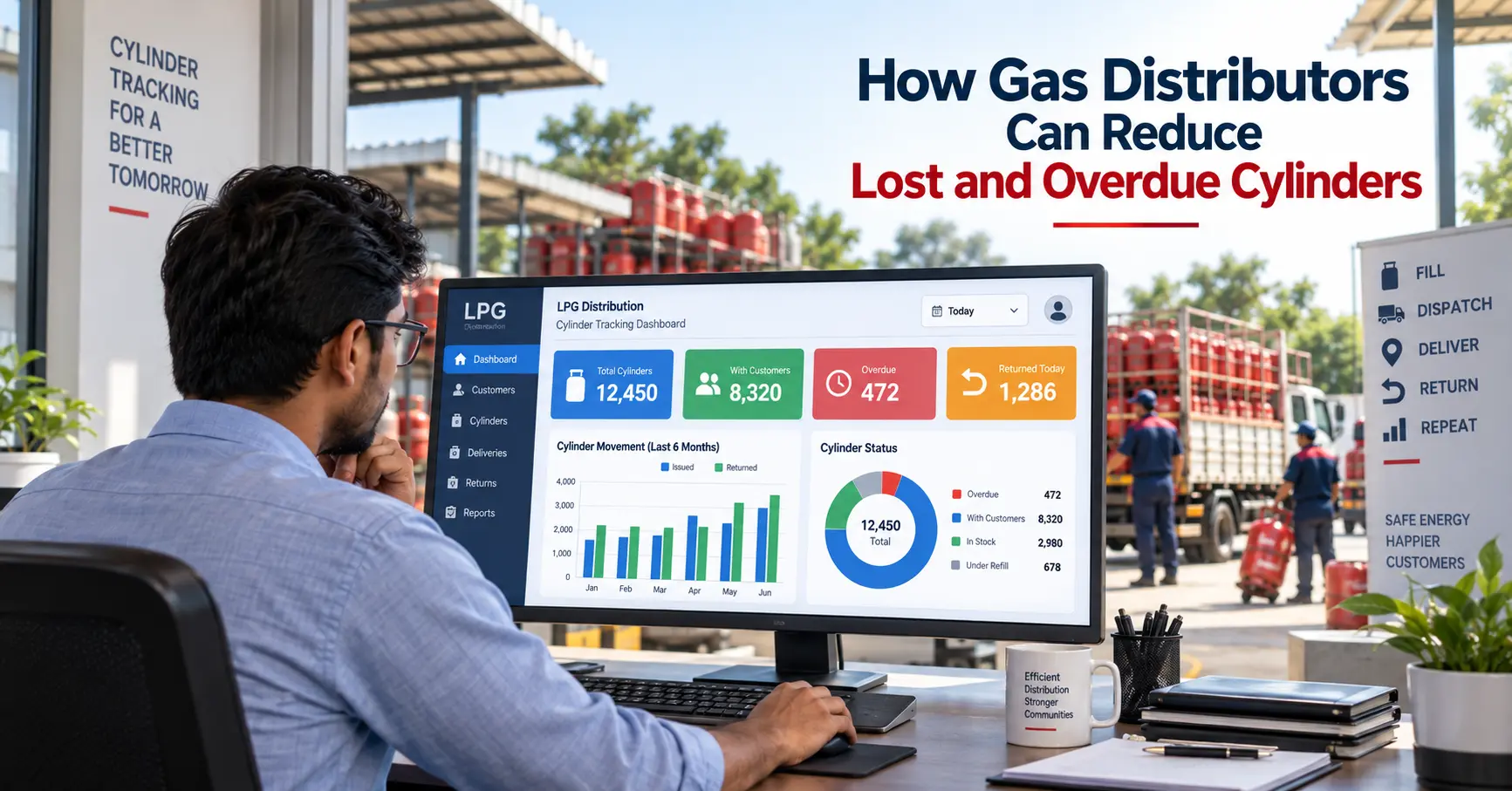
How Gas Distributors Can Reduce Lost and Overdue Cylinders
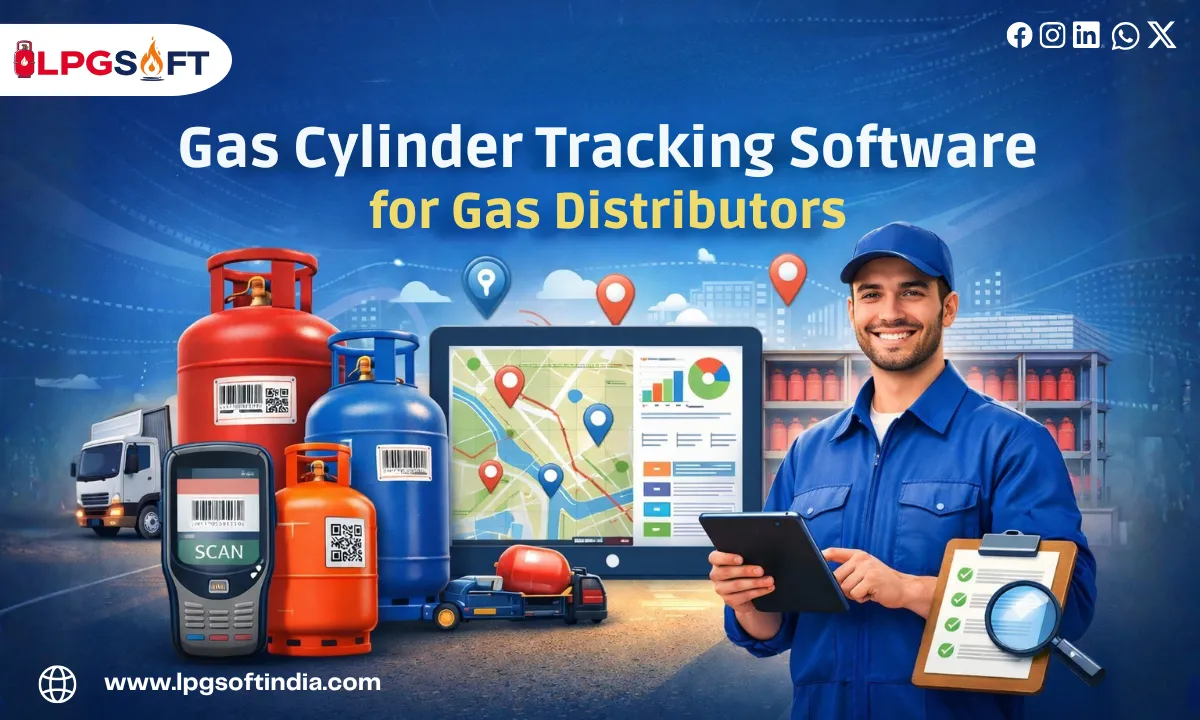
Gas distributors manage a large number of cylinders that continuously move between warehouses, filling points, delivery vehicles and customer locations. When these movements are not recorded properly, cylinders can become difficult to locate, remain with customers longer than expected, or appear missing during stock reconciliation.
Gas distributors can reduce lost and overdue cylinders by maintaining accurate cylinder records, tracking customer-wise balances, recording every dispatch and return, monitoring overdue cylinders, following up on pending returns and regularly reconciling physical stock with digital records.
A structured cylinder management process gives distributors better visibility into where cylinders are, how long they have been outside the warehouse and which returns require attention.
What Is the Difference Between a Lost and an Overdue Cylinder?
Although both situations affect cylinder inventory, a lost cylinder and an overdue cylinder are not the same.
An overdue cylinder is a cylinder that has been delivered or issued but has not been returned within the expected period.
A lost cylinder is a cylinder whose current location or status cannot be reliably confirmed from available records.
| Cylinder Status | Meaning | Recommended Action |
|---|---|---|
| Active | Cylinder is part of normal inventory movement | Continue tracking |
| With Customer | Cylinder is currently held by a customer | Monitor its return |
| Overdue | Expected return has not been received | Follow up with customer |
| Missing | Current location cannot be confirmed | Investigate and recover |
| Returned | Cylinder has been received back | Update inventory |
The important point is that an overdue cylinder can often be identified and recovered before it becomes a long-term inventory loss.
Why Do Gas Cylinders Become Lost or Overdue?
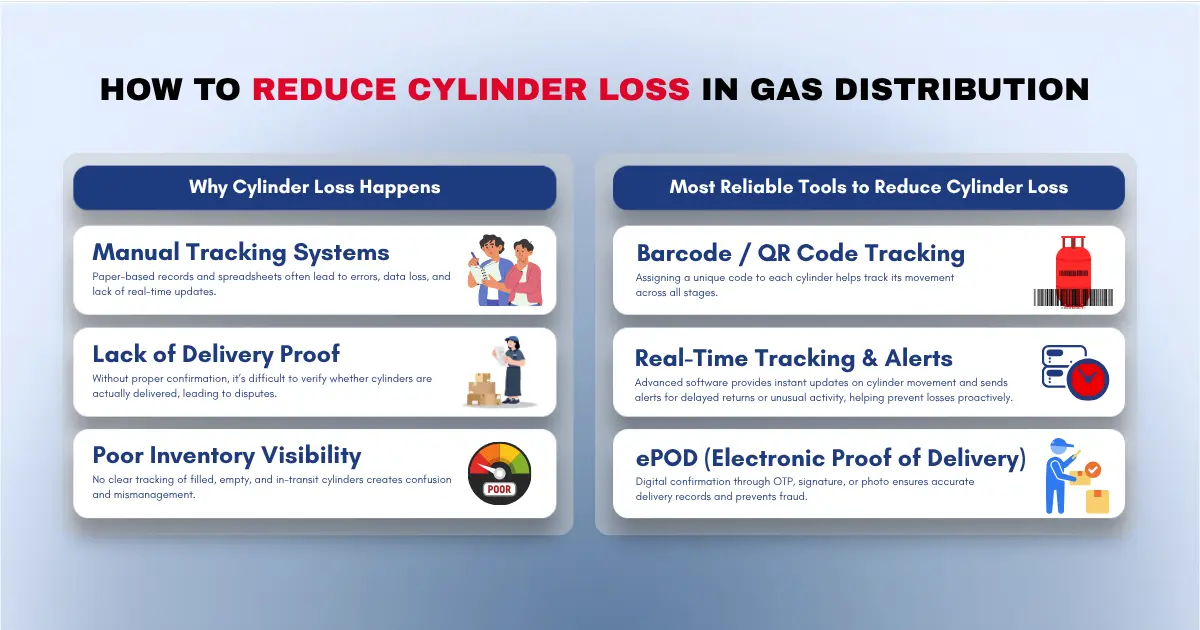
Cylinder losses usually do not happen because of one single issue. Poor record keeping, delayed updates and limited visibility can gradually create inventory discrepancies.
1. Cylinder Returns Are Not Recorded Immediately
A customer may return a cylinder, but if the return is entered into the records later, the system may continue showing the cylinder as outstanding.
This creates a difference between physical stock and recorded stock.
2. Customer-Wise Cylinder Balances Are Unclear
Distributors need to know how many cylinders are currently associated with each customer.
If customer records do not clearly show issued and returned cylinders, identifying outstanding cylinders becomes difficult.
3. There Is No Clear Return Monitoring Process
When distributors only review cylinder stock at the end of a month or during periodic reconciliation, overdue cylinders may remain unnoticed for too long.
4. Manual Registers Create Delayed Updates
Paper registers and disconnected spreadsheets can make it difficult to maintain the same information across delivery, inventory and customer records.
Common problems include:
- Missed entries
- Duplicate records
- Incorrect quantities
- Delayed updates
- Difficult record searches
- Manual reconciliation
5. Delivery and Return Information Are Separate
A cylinder may be recorded during delivery but its return may be managed through another register.
When these records are not connected, it becomes harder to understand the complete movement history.
6. Physical Stock Is Not Reconciled Regularly
Without regular reconciliation, small differences can continue unnoticed and eventually become larger inventory problems.
How Can Gas Distributors Reduce Lost and Overdue Cylinders?
Reducing cylinder losses requires a process that starts when a cylinder leaves the inventory and continues until it is returned.
1. Maintain a Clear Cylinder Record
Each cylinder should have a consistent record within the distributor's inventory system.
Depending on the business process, the record can include:
- Cylinder identification
- Cylinder type
- Filled or empty status
- Customer
- Dispatch date
- Return date
- Current status
- Movement history
This makes it easier to establish accountability throughout the cylinder lifecycle.
2. Record Every Cylinder Movement
A distributor should maintain a clear movement history.
A typical cylinder cycle can look like:
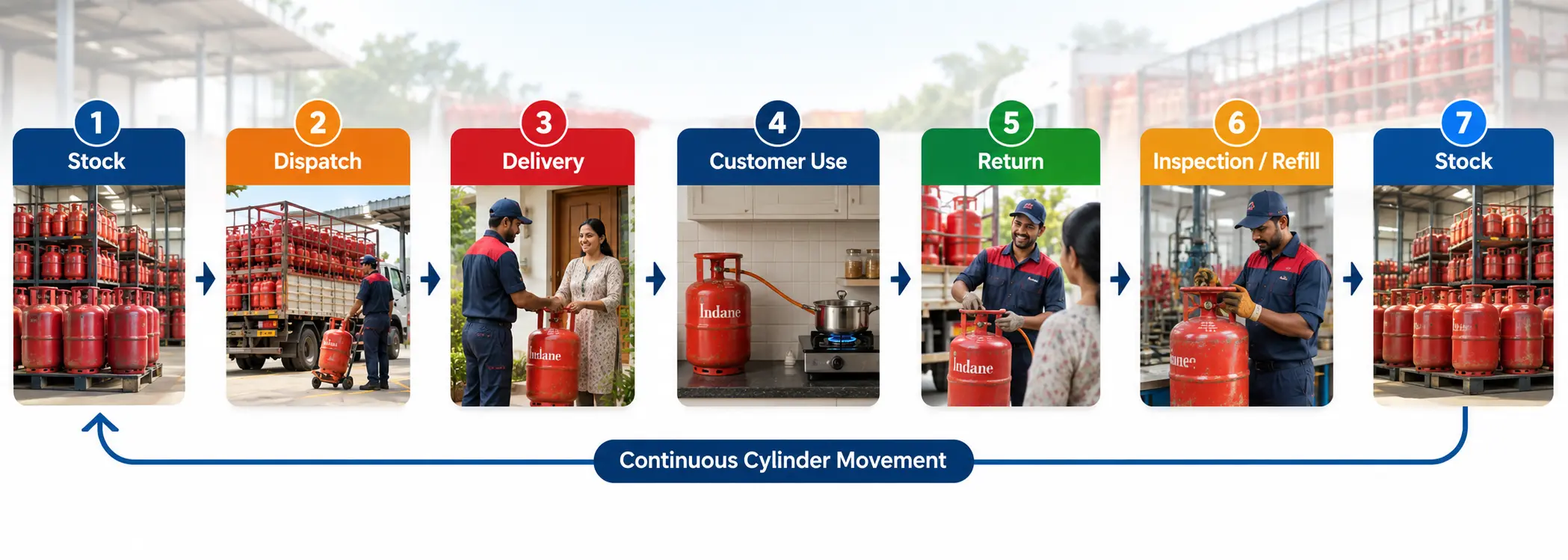
Stock → Dispatch → Delivery → Customer Use → Return → Inspection/Refill → Stock
Recording each important stage helps identify where a cylinder currently stands.
3. Maintain Customer-Wise Cylinder Balances
Customer-level records should show the number of cylinders issued, returned and currently outstanding.
For example:
| Customer | Issued | Returned | Outstanding |
|---|---|---|---|
| Customer A | 10 | 8 | 2 |
| Customer B | 6 | 6 | 0 |
| Customer C | 12 | 9 | 3 |
This makes outstanding cylinders easier to identify and follow up.
4. Set Clear Return Expectations
Distributors should establish expected return periods according to their business process and customer agreements.
Once an expected return date is recorded, distributors can identify cylinders that have remained outside the normal cycle.
5. Identify Overdue Cylinders Early
Do not wait until a major stock mismatch appears.
Regularly review cylinders that have remained with customers beyond the expected period.
Early identification gives the distributor more time to contact the customer and arrange recovery.
6. Follow Up on Outstanding Cylinders
An overdue list can help staff prioritize customer follow-ups.
Instead of checking every customer manually, the distributor can focus first on cylinders that have been outstanding for the longest period or have exceeded the expected return timeline.
7. Update the Record After Every Return
Once a cylinder is physically returned, its status should be updated promptly.
This ensures that the inventory record reflects the actual stock available to the distributor.
8. Reconcile Physical and Recorded Stock
Regular reconciliation helps answer an important question:
9. Does the physical cylinder count match the recorded cylinder balance?
If there is a difference, the distributor can investigate the underlying movement records before the discrepancy becomes difficult to trace.
What Should a Cylinder Return Tracking System Record?
A useful cylinder return tracking system should maintain the information needed to understand the complete movement of each cylinder.
| Information | Why It Matters |
|---|---|
| Cylinder ID | Helps identify the cylinder |
| Customer | Shows who currently holds it |
| Dispatch Date | Shows when it left inventory |
| Expected Return | Helps identify overdue cylinders |
| Actual Return Date | Confirms recovery |
| Cylinder Type | Distinguishes cylinder categories |
| Filled/Empty Status | Shows current condition |
| Current Status | Shows whether it is available, issued, returned or outstanding |
| Movement History | Provides a record of previous activity |
The more complete the movement history, the easier it becomes to investigate an outstanding cylinder.
How Does Cylinder Reconciliation Help Prevent Loss?
Cylinder reconciliation compares the distributor's recorded movements with the physical inventory.
A basic reconciliation approach can be represented as:
Opening Stock + Cylinders Received − Cylinders Dispatched − Other Recorded Movements = Expected Closing Stock
The expected closing stock can then be compared with the physical cylinder count.
A mismatch may require investigation into:
- Unrecorded returns
- Missing movement entries
- Incorrect dispatch records
- Damaged cylinders
- Incorrect stock adjustments
- Missing cylinders
Regular reconciliation helps distributors identify discrepancies earlier instead of discovering them after a long period.
Manual Cylinder Tracking vs Digital Cylinder Management
| Manual Tracking | Digital Cylinder Management |
|---|---|
| Paper registers and spreadsheets | Centralized digital records |
| Manual stock updates | Faster record updates |
| Difficult to identify overdue cylinders | Easier visibility of outstanding cylinders |
| Separate customer records | Customer-wise cylinder information |
| Manual reconciliation | Structured inventory reporting |
| Difficult movement history | Centralized movement records |
| Follow-ups depend on manual checking | Reports help identify priority cases |
Digital software does not automatically eliminate every cylinder loss. Its value is in providing better visibility, organized records and timely information so distributors can take action earlier.
How Can Software Help Reduce Lost and Overdue Cylinders?
Cylinder management software can connect inventory, customer, order and delivery information in one system.
Depending on the software, distributors can use it to:
- Track filled and empty cylinders
- Monitor incoming and outgoing stock
- Maintain customer records
- Record cylinder deliveries
- Manage cylinder returns
- Monitor outstanding cylinders
- Review stock movement
- Generate inventory reports
- Track delivery activities
- Review customer-wise consumption
- Support regular reconciliation
This creates a connected workflow instead of maintaining separate records for each operational activity.
How LPGSoft Helps Gas Distributors Manage Cylinders
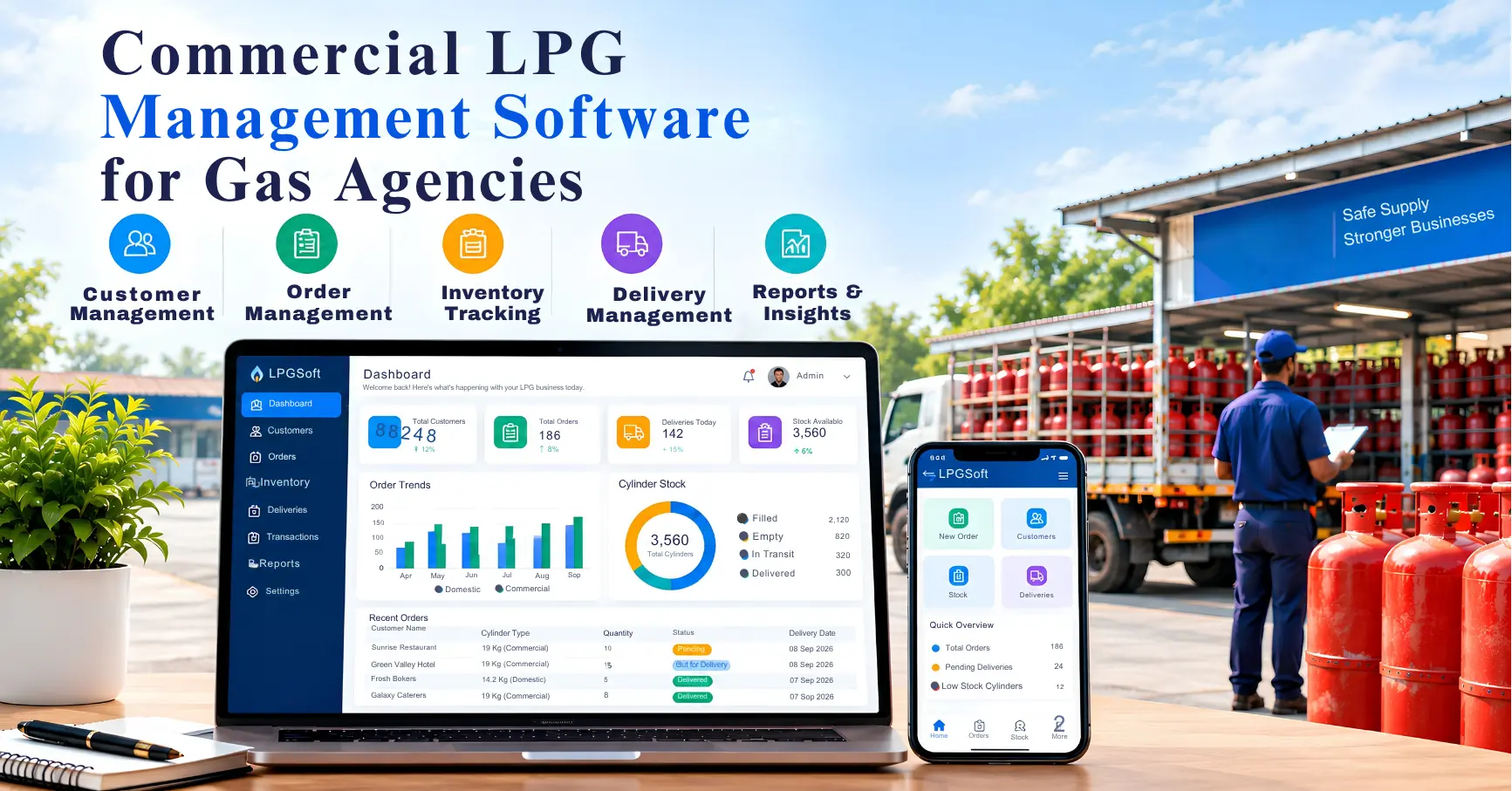
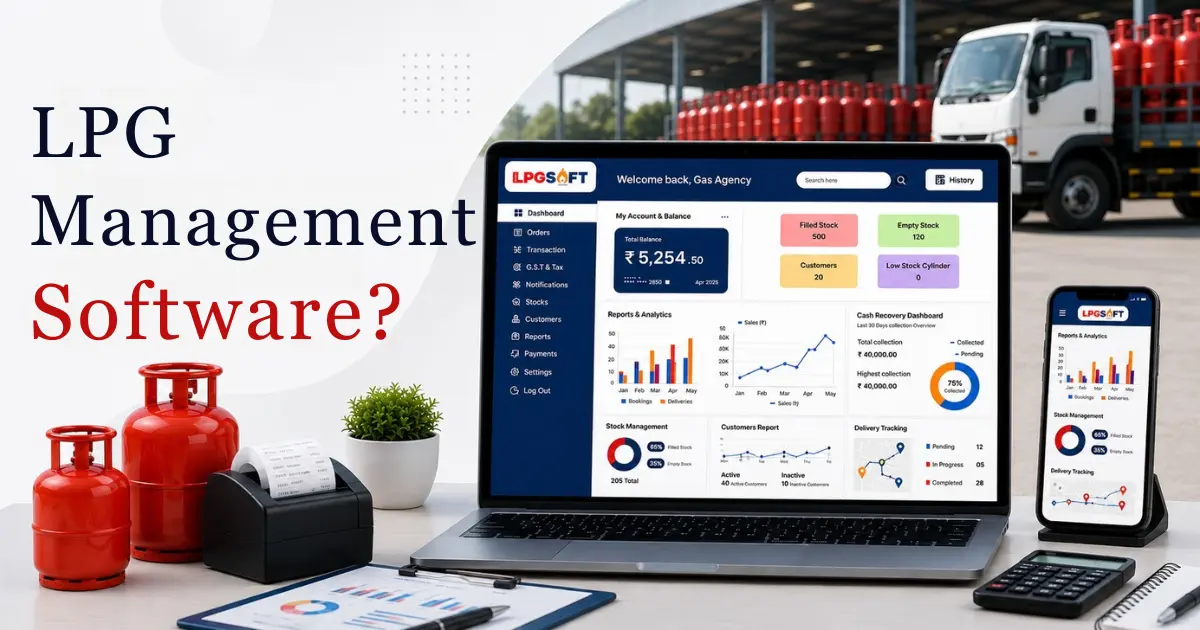
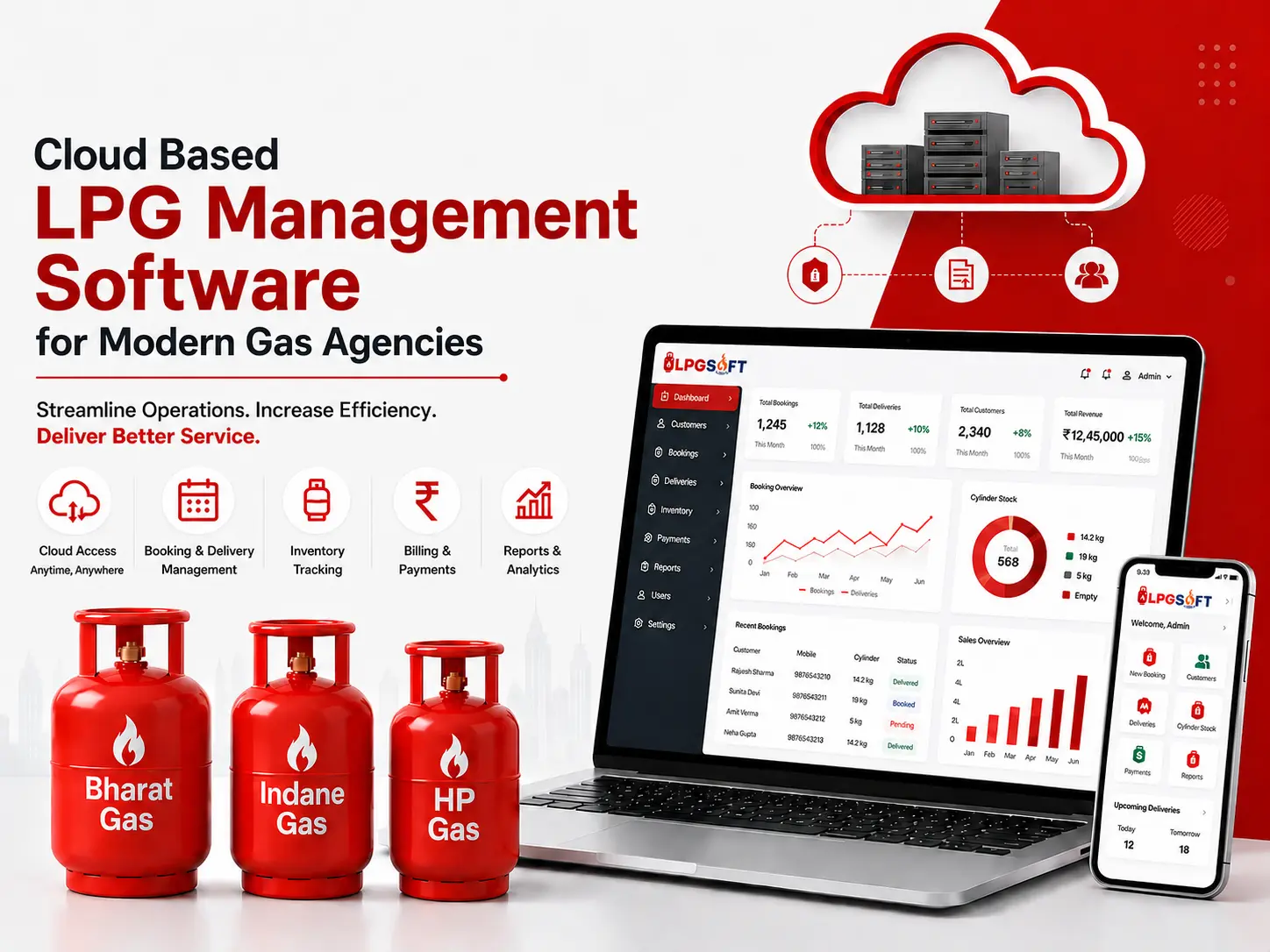
LPGSoft is designed to bring important gas agency and distribution activities together in one platform.
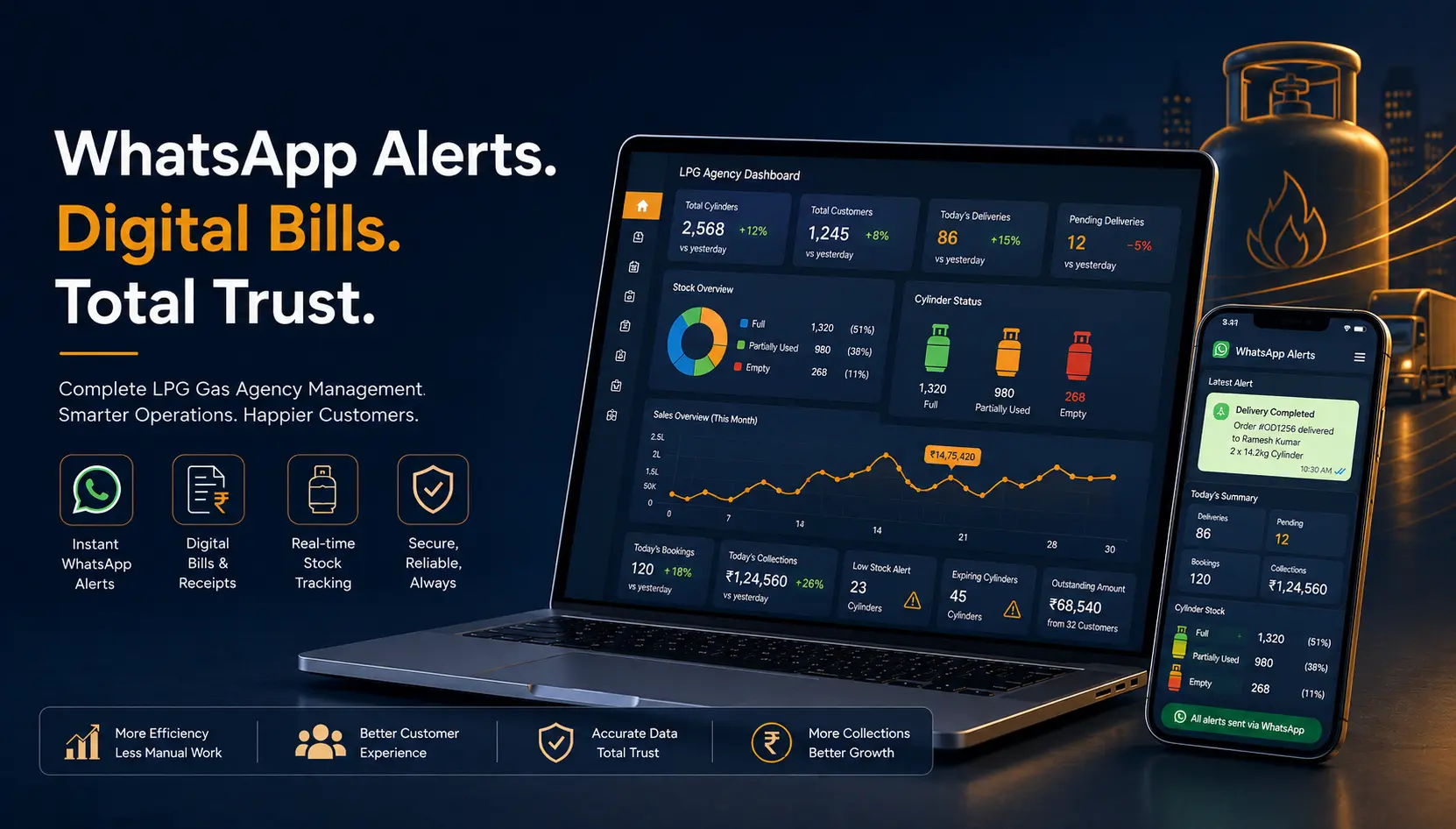
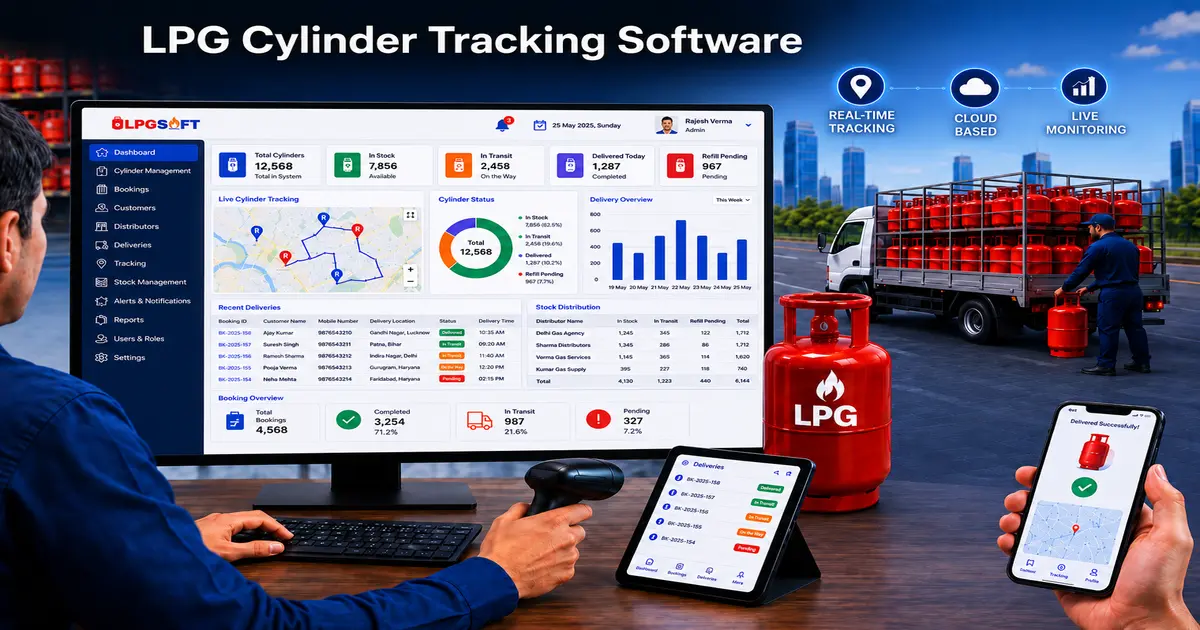
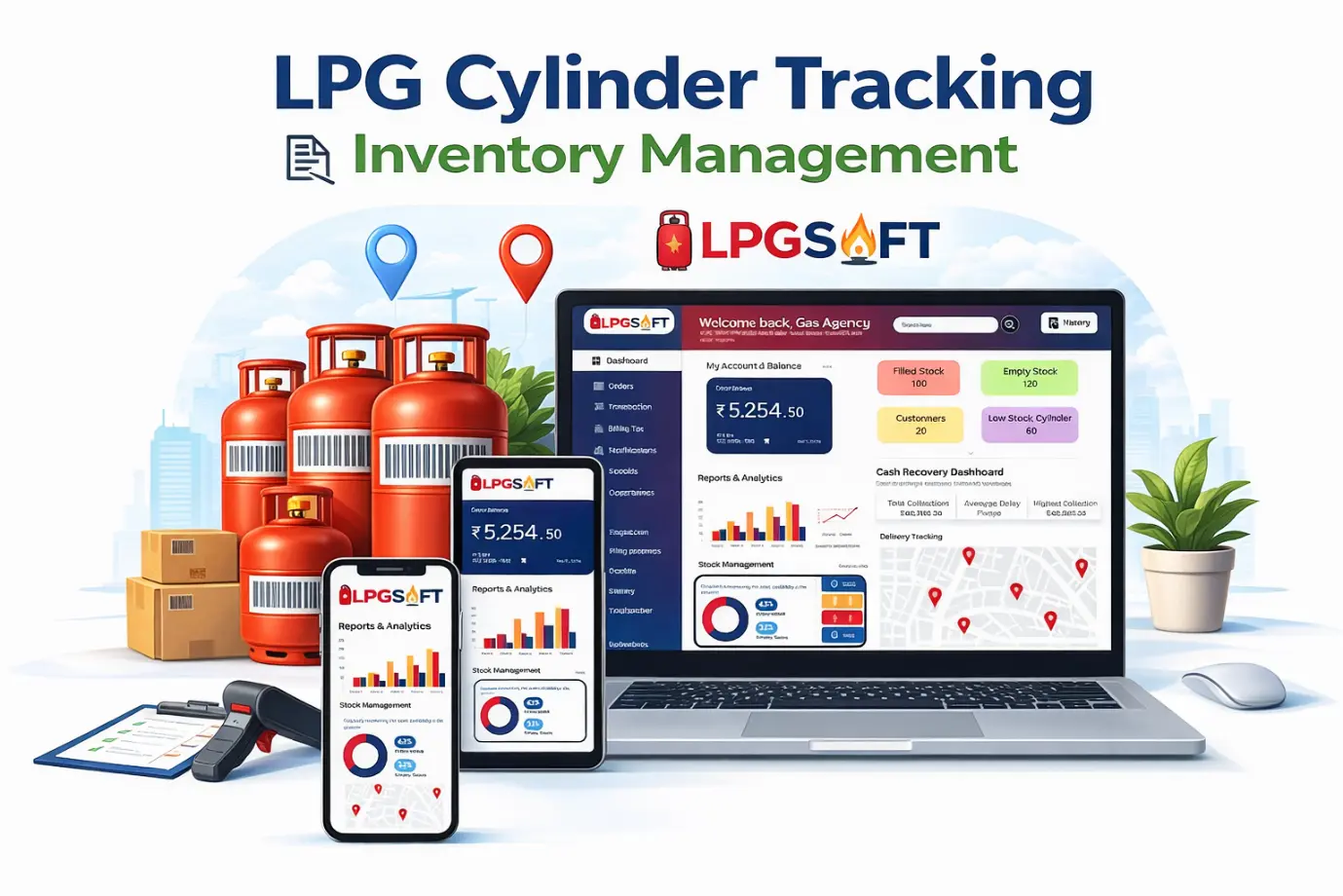
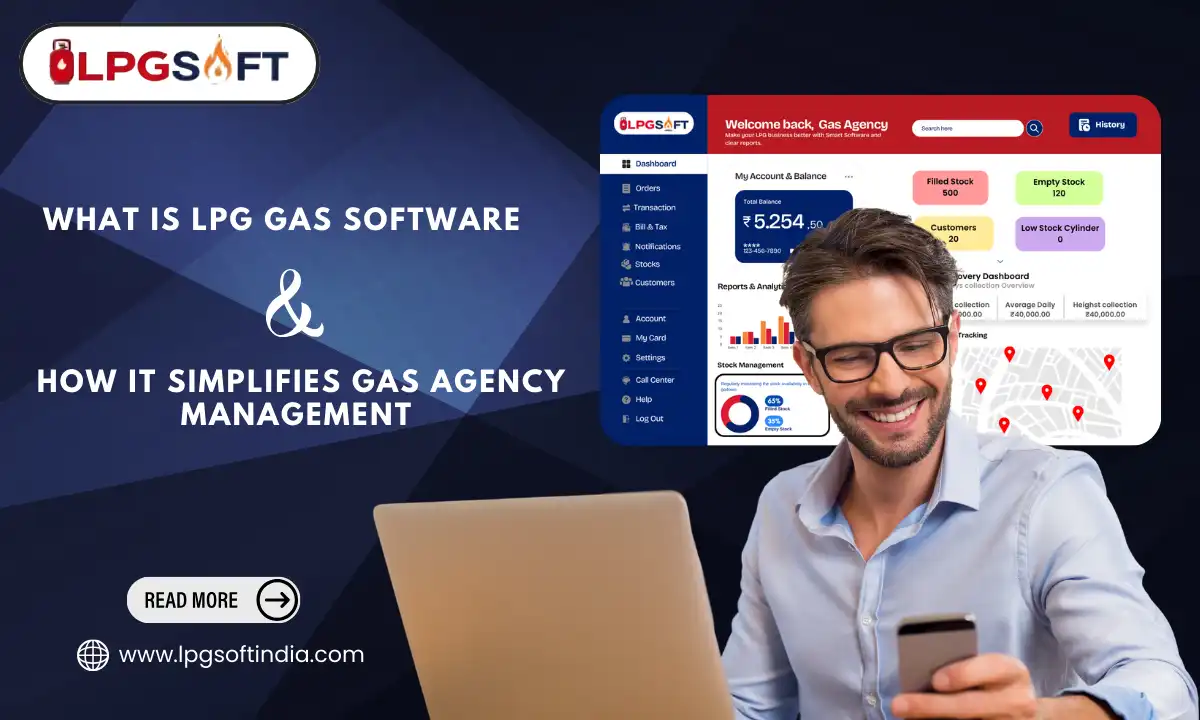
For cylinder management, distributors can use LPGSoft to manage filled and empty cylinder inventory, real-time stock information, delivery activities, customer records and reports.
Filled and Empty Cylinder Management
LPGSoft supports filled and empty cylinder management, helping distributors maintain clearer visibility of cylinder stock.
Real-time stock tracking helps distributors monitor incoming and outgoing inventory and identify stock levels more easily.
Cylinder Return Management
Return-related processes can be connected with order and delivery operations, helping distributors maintain better records of cylinder movements.
Customer-Wise Information
Customer records and transaction history provide a centralized view of customer activity, making it easier to review delivery and cylinder-related information.
LPGSoft supports delivery planning, staff assignment and delivery status tracking, helping distributors coordinate daily cylinder deliveries.
Reports and Analytics
Reports can help distributors review sales, stock, customer activity and cylinder purchase or return information.
The objective is to give distributors better operational visibility so they can identify discrepancies, review outstanding activity and manage their cylinder inventory more systematically.
A Practical Cylinder Recovery Workflow
A simple recovery process can help distributors handle overdue cylinders consistently.
Identify
Find cylinders that have exceeded the expected return period.
Verify
Check the customer, dispatch date, cylinder status and previous movement records.
Contact
Follow up with the customer regarding the outstanding cylinder.
Recover
Arrange the return or collection according to the distributor's normal process.
Record
Update the cylinder status immediately after the cylinder is returned.
Reconcile
Check that the physical return matches the inventory record.
This creates a continuous cycle:
Identify → Verify → Contact → Recover → Record → Reconcile
Cylinder Loss Prevention Checklist
Gas distributors can use this checklist as part of their regular cylinder
management process:
- Maintain clear cylinder records
- Record every dispatch
- Record every return
- Maintain customer-wise balances
- Monitor outstanding cylinders
- Review cylinder ageing regularly
- Track filled and empty cylinders
- Update returned cylinders promptly
- Reconcile physical and recorded stock
- Review delivery records
- Follow up on overdue cylinders
- Maintain cylinder movement history
- Review inventory reports regularly
Following these practices can improve visibility and make cylinder recovery more systematic.
Conclusion
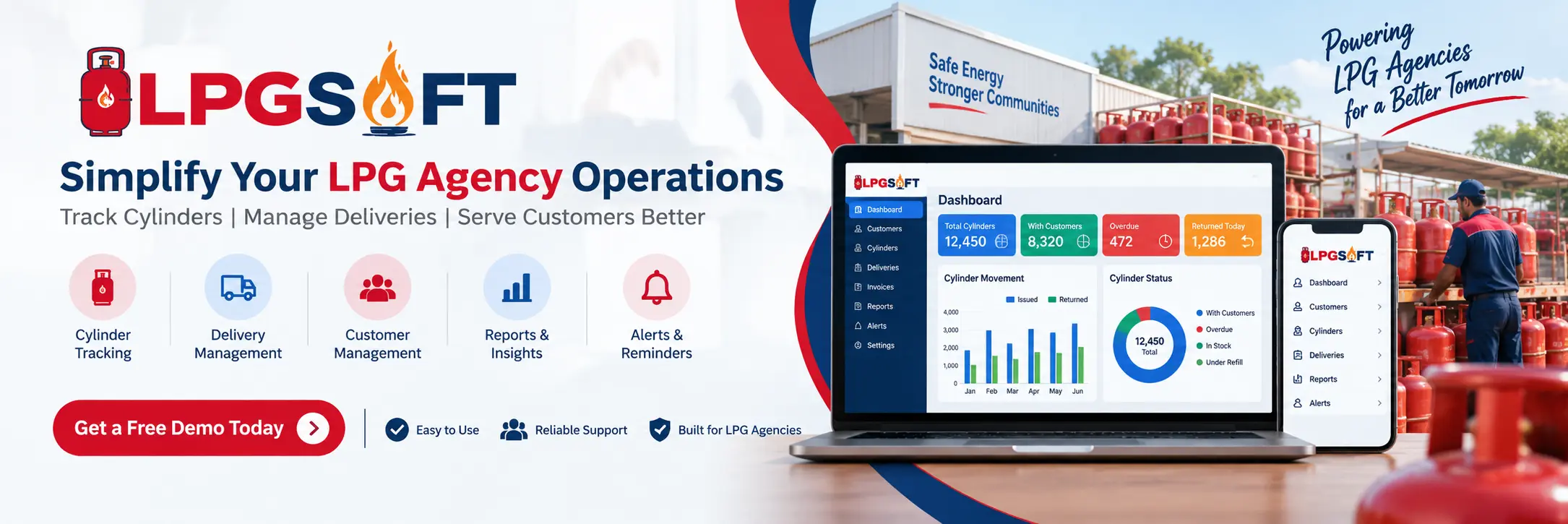
LPGSoft helps gas distributors manage filled and empty cylinders, inventory, deliveries, customer information and business reports through a centralized platform.
Reduce Cylinder Loss with Better Visibility
Know what has been dispatched, what has been returned and what remains outstanding.
Request a Free LPGSoft Demo Today and take better control of your cylinder inventory and distribution operations.
FAQ’S
Gas distributors can reduce cylinder losses by maintaining accurate cylinder records, tracking every dispatch and return, monitoring customer-wise balances, reconciling physical and recorded inventory, and following up on outstanding cylinders.
An overdue gas cylinder is a cylinder that has been delivered or issued but has not been returned within the expected period established by the distributor's business process or customer agreement.
Distributors can maintain customer-wise cylinder records that show issued, returned and outstanding cylinders along with dispatch dates, return information and current status.
Cylinder tracking software centralizes movement, inventory, customer and delivery information. This improves visibility into outstanding cylinders and helps distributors identify discrepancies and follow up earlier.
Distributors can monitor returns by recording each dispatch and return, maintaining customer-wise balances, reviewing overdue cylinders, and reconciling physical cylinder counts with recorded inventory.
Yes. LPGSoft supports filled and empty cylinder management along with inventory tracking, delivery management, customer records and reporting, helping gas distributors maintain better control over cylinder operations.