
LPG Soft
25th Aug 2026
Commercial vs Domestic LPG Customers: How to Manage Both Efficiently
Every LPG distributor juggles two very different customer worlds under one roof. On one side, domestic household order a cylinder every few weeks, expect doorstep delivery, and rarely think twice about paperwork. On the other, commercial customers restaurants, hotels, bakeries, hostels, and small manufacturing units consume LPG in bulk, need documented consumption trails, and often negotiate credit terms.
Treating both segments with the same billing process, the same delivery priority, and the same follow-up cadence is one of the most common (and costly) mistakes gas agencies make. Here's how to tell the two apart operationally, and how the right software makes managing both effortless.
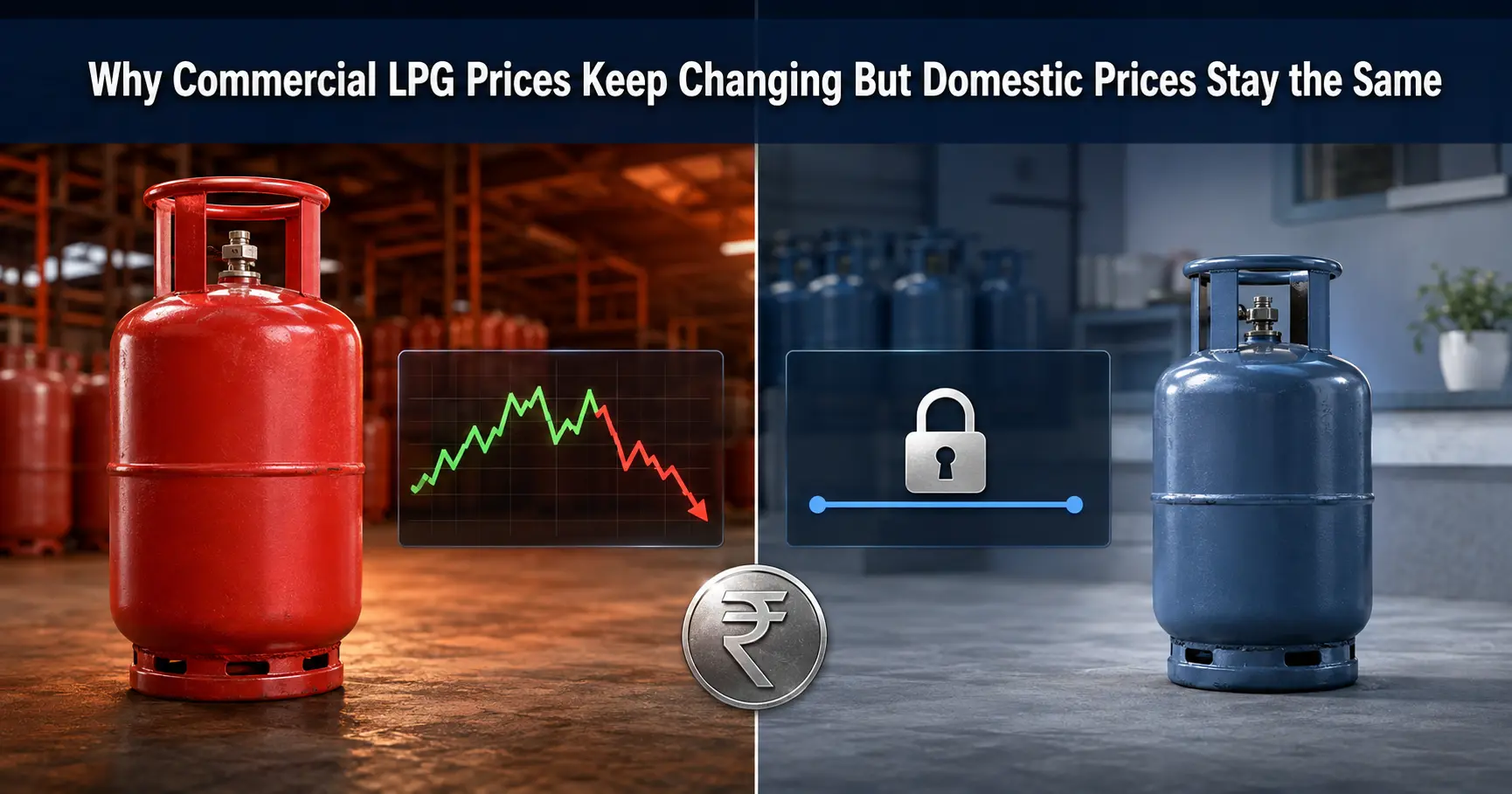
Why Commercial and Domestic Customers Can't Be Managed the Same Way
Different Consumption Patterns
Domestic customers follow a fairly predictable, low-volume refill cycle. Commercial customers consume in bulk, on tighter timelines, and a missed delivery can directly disrupt their business a restaurant kitchen going cold during lunch hour is a very different problem than a household running out of gas for a day.
Different Compliance and Documentation Needs
Commercial LPG connections typically require more rigorous documentation — consumption certificates, safety inspection records, and usage proofs for regulatory or insurance purposes. Domestic connections are comparatively simple, governed mostly by subsidy eligibility and KYC norms.
Different Billing Expectations
Households usually pay per cylinder at the time of delivery. Commercial accounts often run on credit cycles, bulk-rate pricing, and monthly or fortnightly invoicing — which means agencies need a system that can track dues, generate GST-compliant invoices, and flag overdue commercial accounts without manual reconciliation.
Different Relationship Value
A single commercial account can be worth dozens of domestic connections in monthly volume. Losing a domestic customer is a minor churn event; losing a large commercial account to a competitor is a revenue hit that shows up immediately on the books.
Common Pitfalls When Agencies Don't Segment Their Customers
- Delivery mix-ups: Bulk commercial orders get queued behind routine domestic deliveries, leading to delays that damage high-value relationships.
- Billing confusion: Applying flat per-cylinder pricing to commercial accounts that were promised bulk-rate slabs, leading to disputes and manual corrections.
- Compliance gaps: Missing safety inspection or consumption documentation for commercial connections, creating audit risk.
- No visibility into credit exposure: Agencies extending informal credit to commercial customers with no system tracking outstanding dues across accounts.
- Generic communication: Sending the same WhatsApp reminders and offers to a five-star hotel kitchen and an individual household — missing what each segment actually cares about.
How to Manage Both Segments Efficiently
1. Segment Customers at the Data Level, Not Just on Paper
The starting point is a system where every customer record is tagged — domestic or commercial — with segment-specific fields: consumption slabs, credit limit, GST details, and documentation status for commercial accounts. This isn't a filter you apply later; it needs to be built into how records are created.
2. Set Independent Delivery Priorities and Routes
Commercial bulk orders should be routable and schedulable independently of the regular domestic delivery cycle, so a large restaurant order doesn't sit in the same queue as routine household refills. Route planning that treats these as separate workflows prevents the delays that damage commercial relationships.
3. Automate Segment-Specific Billing
Domestic billing stays simple: per-cylinder, at time of delivery. Commercial billing needs slab-based or negotiated pricing, credit-cycle invoicing, and automatic GST-compliant invoice generation. When both run through the same manual process, errors and disputes are almost guaranteed — automation removes that risk entirely.
4. Track Credit Exposure in Real Time
For commercial accounts operating on credit, agencies need constant visibility into outstanding dues, aging invoices, and credit limits — not a monthly reconciliation surprise. A dashboard view of commercial receivables lets agency owners act on overdue accounts before they become bad debt.
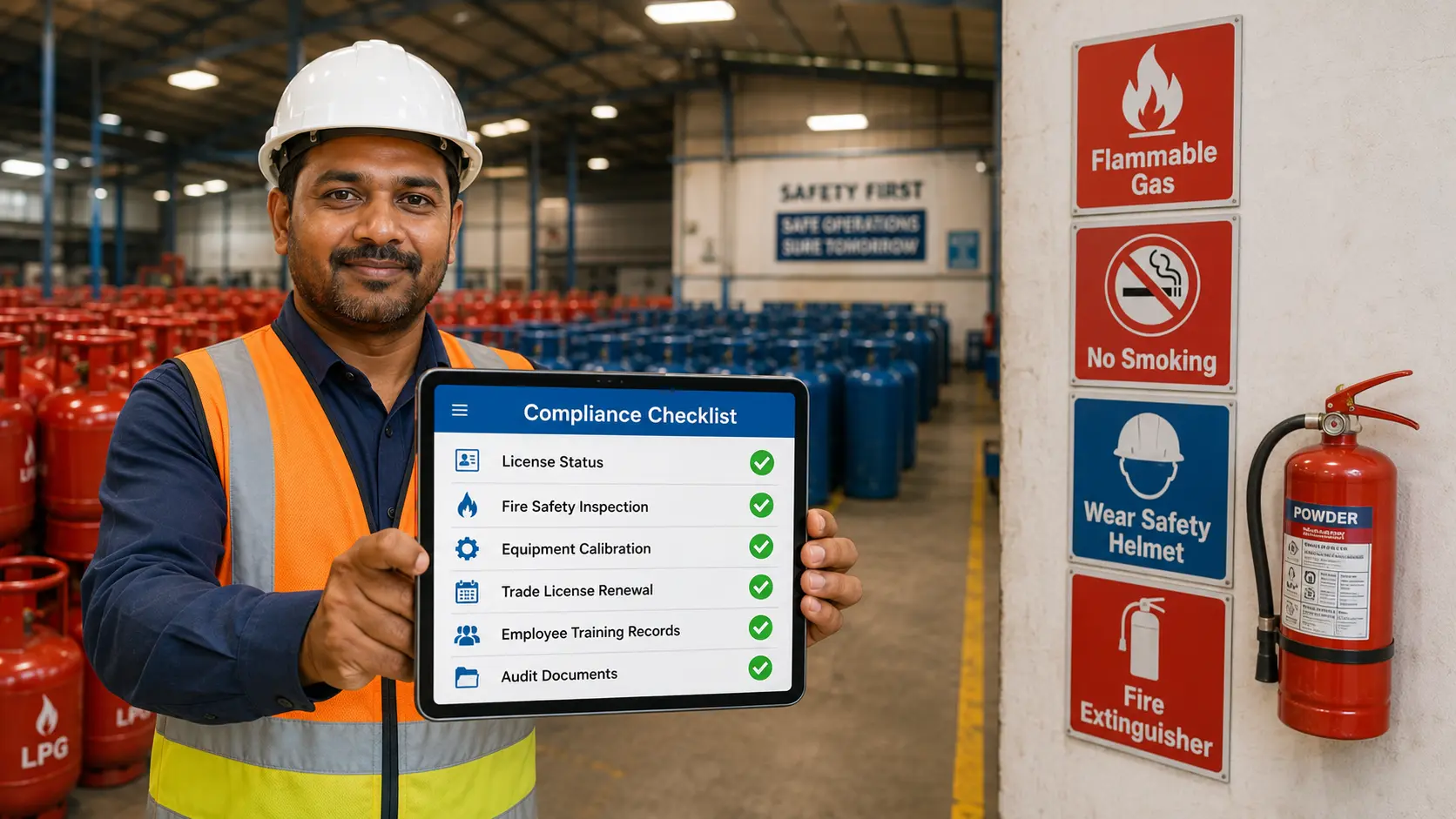
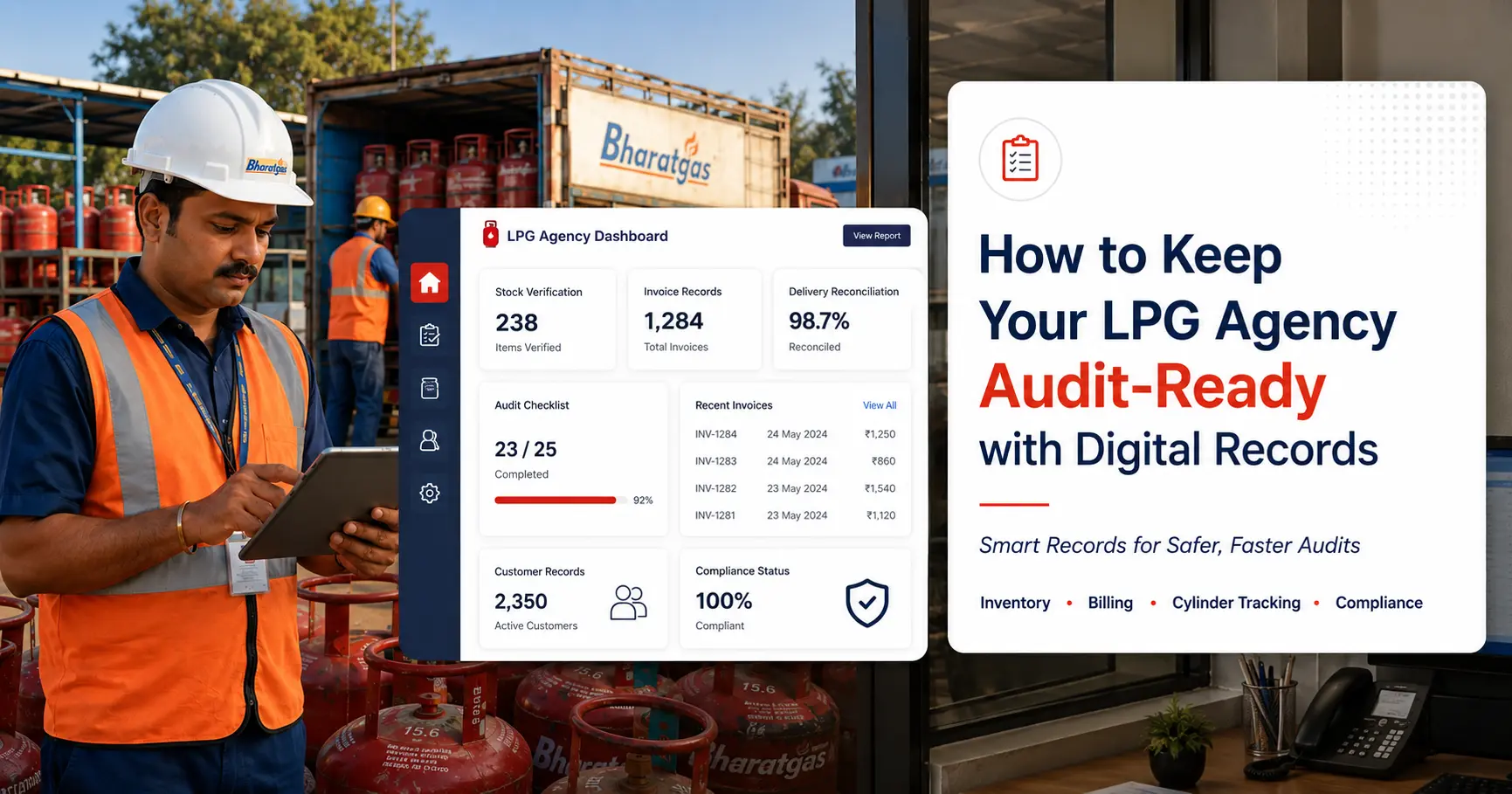
5. Keep Commercial Compliance Documentation On File and Retrievable
Consumption certificates, safety inspection reports, and usage records for commercial connections should be stored digitally and linked to each account, so they're instantly available if a regulator, auditor, or insurer asks for them — not buried in a physical file somewhere.
6. Personalize Communication by Segment
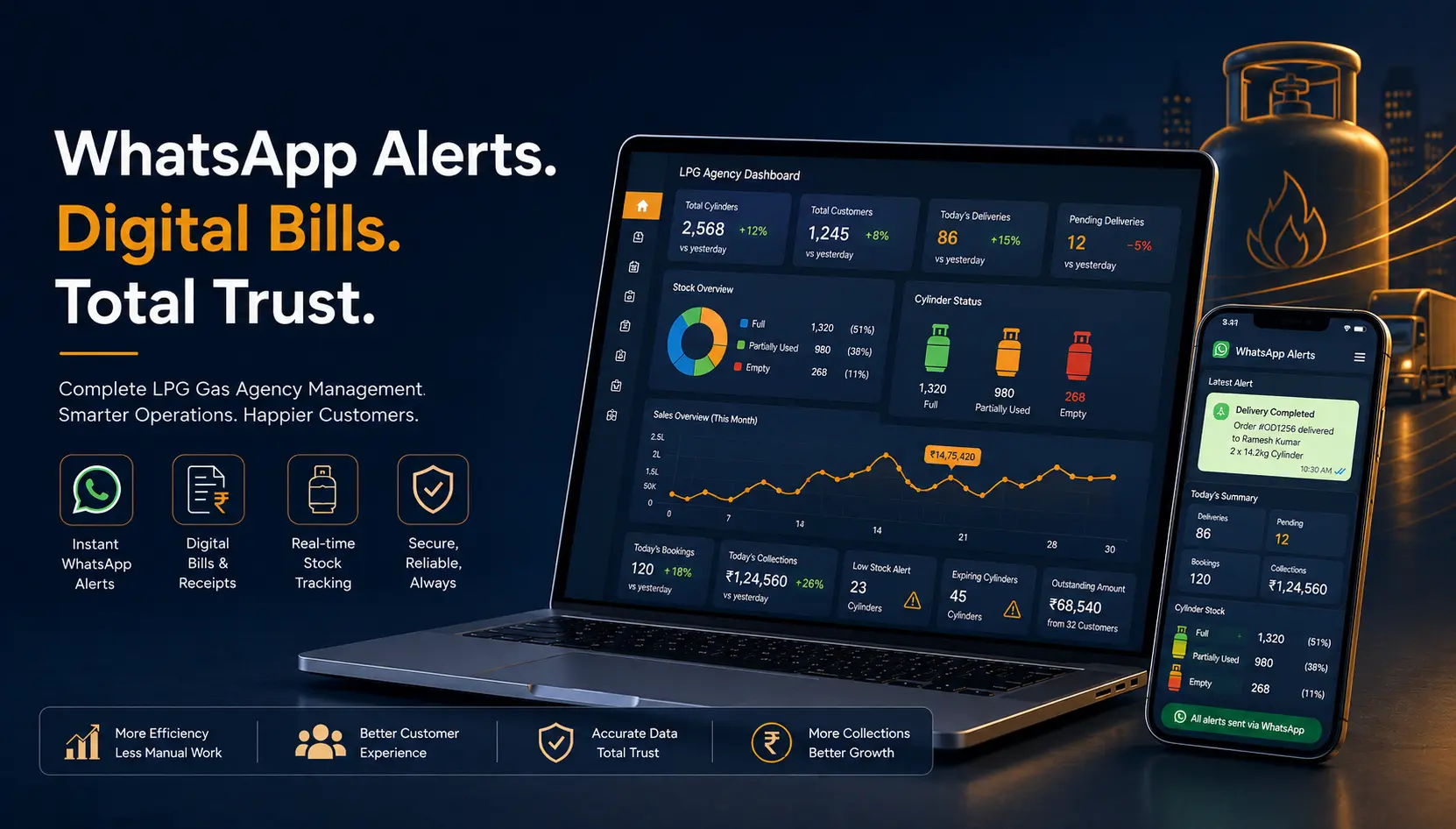
Domestic customers respond well to simple delivery confirmations and refill reminders. Commercial customers value delivery scheduling confirmations, invoice and due-date alerts, and account-level updates. Segment-aware WhatsApp and SMS notifications keep both groups informed in the way that actually matters to them.
What This Looks Like with LPGSoft
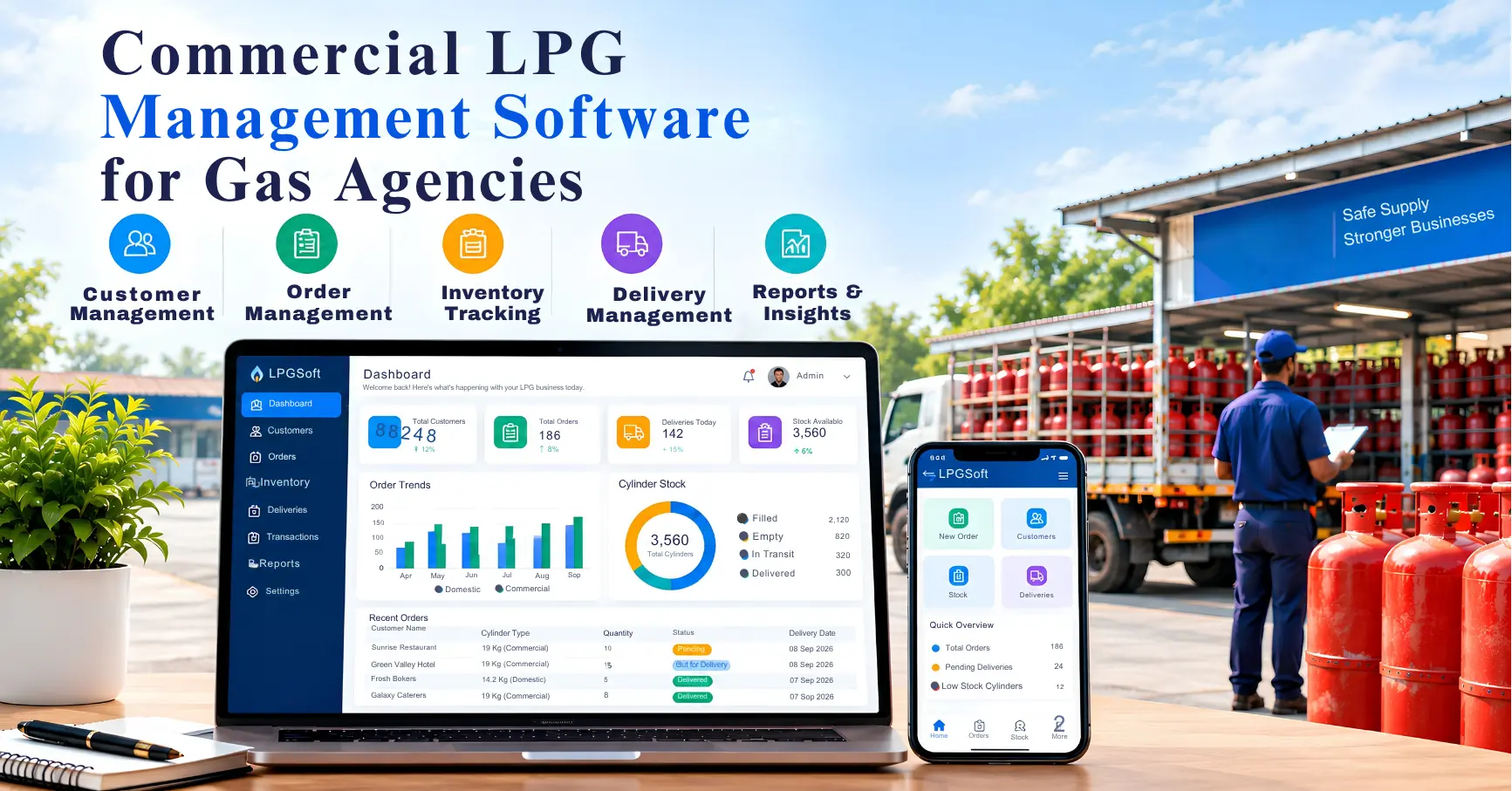
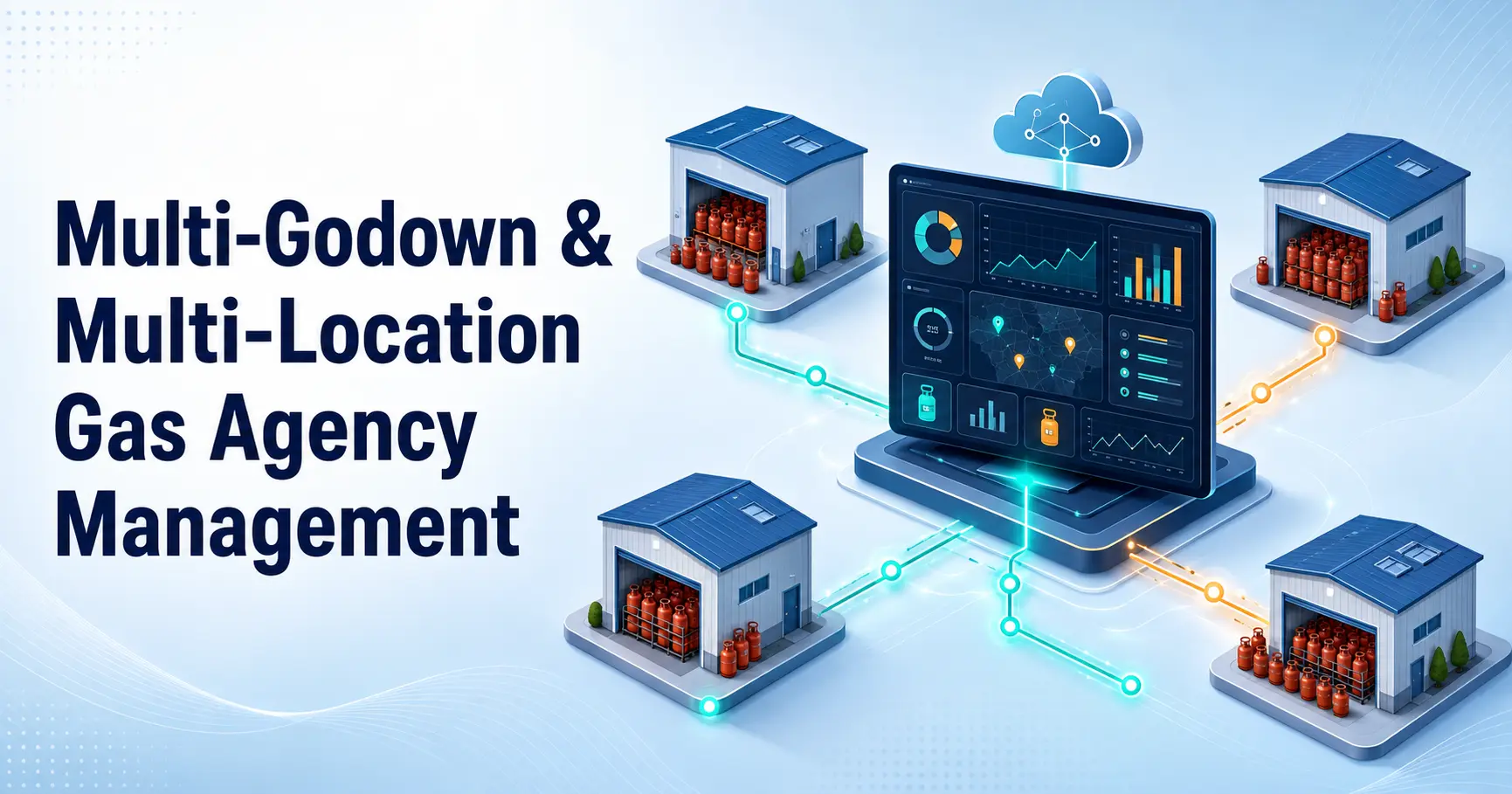
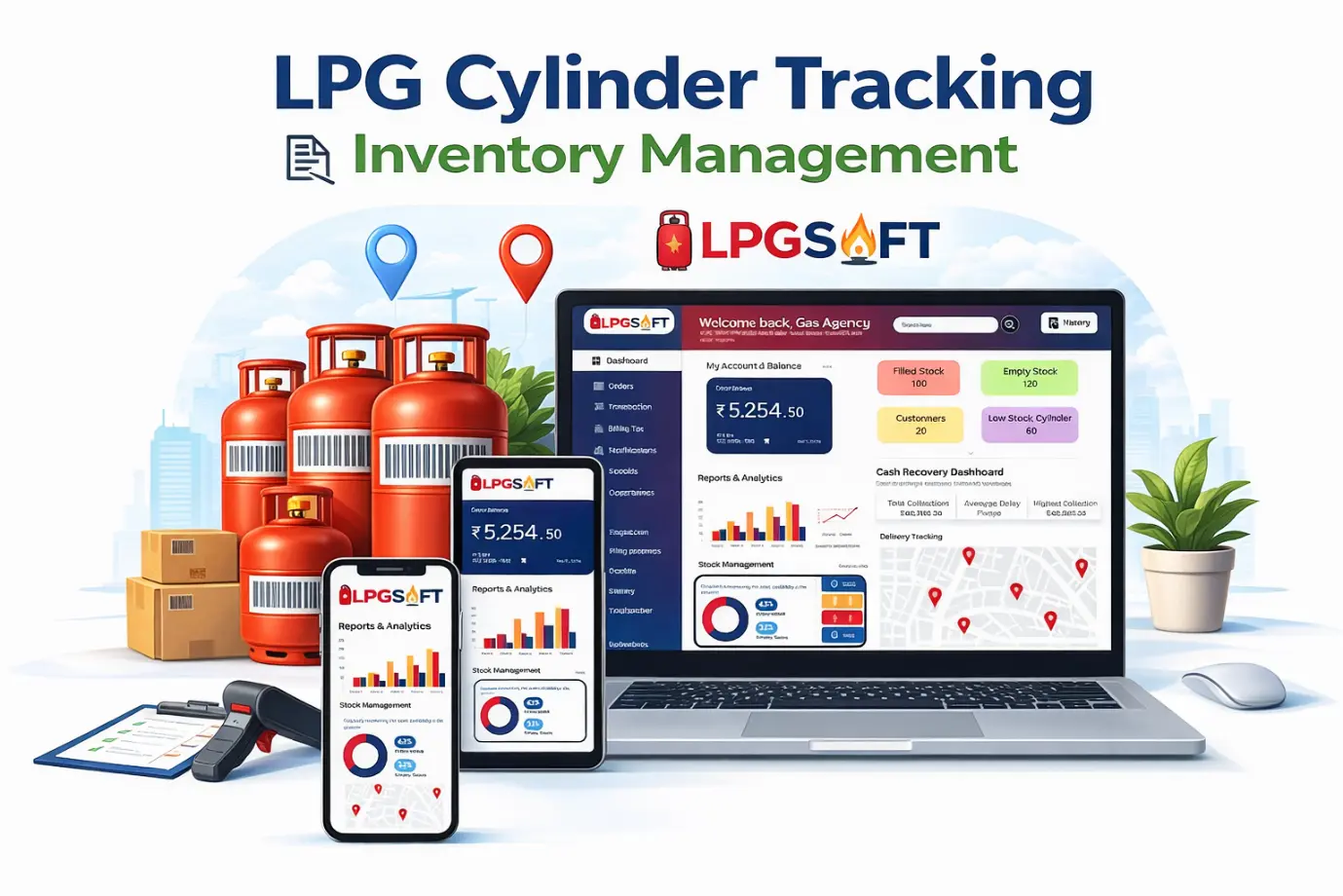
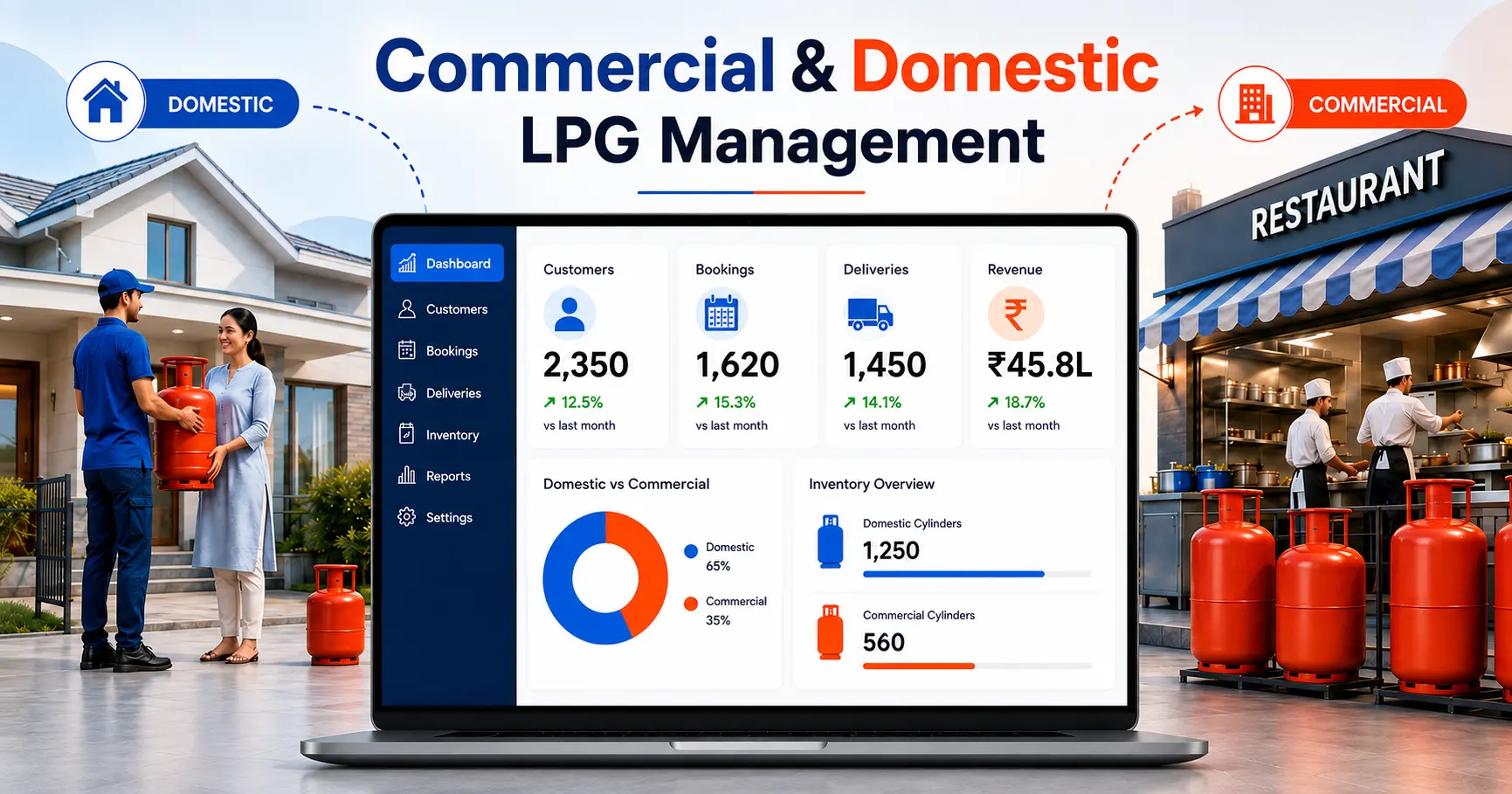
LPGSoft is built to handle this segmentation natively rather than forcing agencies to run parallel manual systems. Multi-godown and multi-location agencies can:
- Maintain distinct customer profiles for domestic and commercial connections, complete with segment-specific fields and documentation.
- Run independent delivery scheduling so bulk commercial orders never get stuck behind the regular domestic queue.
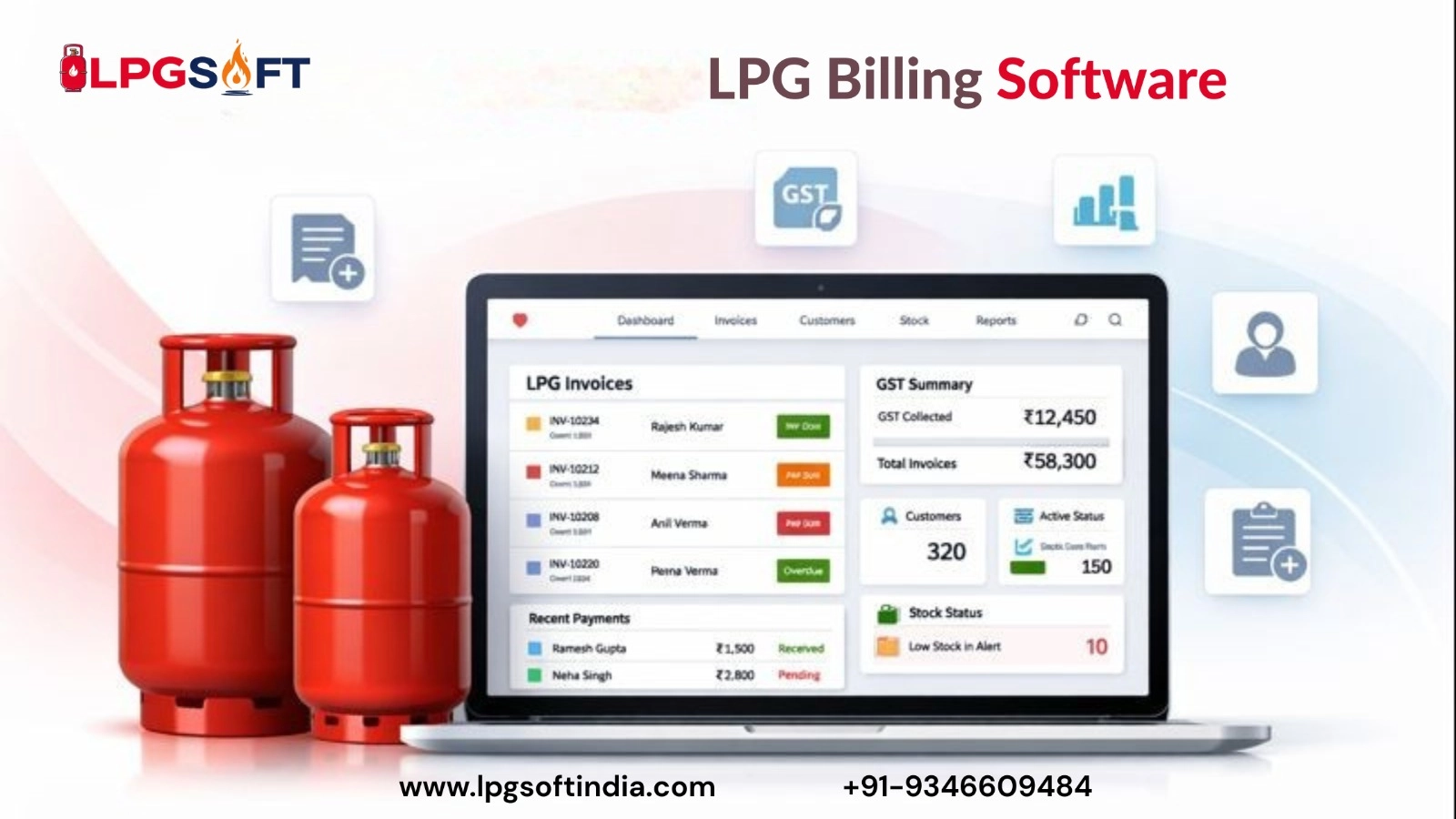
- Auto-generate invoices matched to each customer's billing model — instant per-cylinder billing for domestic, slab-based and credit-cycle invoicing for commercial.
- Monitor commercial credit exposure and overdue accounts from a single dashboard, instead of chasing spreadsheets.
- Send segment-appropriate WhatsApp and digital notifications, keeping households and commercial clients each informed on what matters to them.
Managing domestic and commercial LPG customers well isn't about treating one segment as more important than the other it's about recognizing that they run on different rhythms, and giving each the operational structure it needs. Agencies that segment properly protect their highest-value commercial relationships while keeping domestic service smooth and reliable all from one system.
FAQ’S
Yes. LPGSoft lets you maintain separate customer profiles for domestic and commercial connections within a single system, each with its own fields, documentation, and billing rules no need for separate tools or manual workarounds.
LPGSoft supports independent delivery scheduling and routing, so commercial bulk orders can be planned and dispatched on their own priority track instead of competing with routine domestic refill deliveries.
Yes. LPGSoft supports slab-based and negotiated pricing along with credit-cycle invoicing for commercial accounts, while domestic customers continue to be billed instantly per cylinder all generated automatically and GST-compliant.
LPGSoft gives you a real-time dashboard view of commercial receivables, aging invoices, and credit limits, so you can follow up on overdue accounts before they turn into bad debt.
Yes. Consumption certificates, safety inspection records, and usage documentation can be stored digitally against each commercial account, ready to retrieve instantly for audits or regulatory checks.
Ready to Stop Managing Domestic and Commercial Customers the Hard Way?
Running both customer segments on spreadsheets, separate registers, or generic software built only for household refills is costing your agency time, revenue, and your most valuable commercial accounts.
LPGSoft gives you one platform to manage domestic and commercial LPG customers with segment-based billing, independent delivery scheduling, real-time credit tracking, and built-in compliance records.
Book a free LPGSoft demo today and see how easily your agency can run both customer segments without the manual mess.